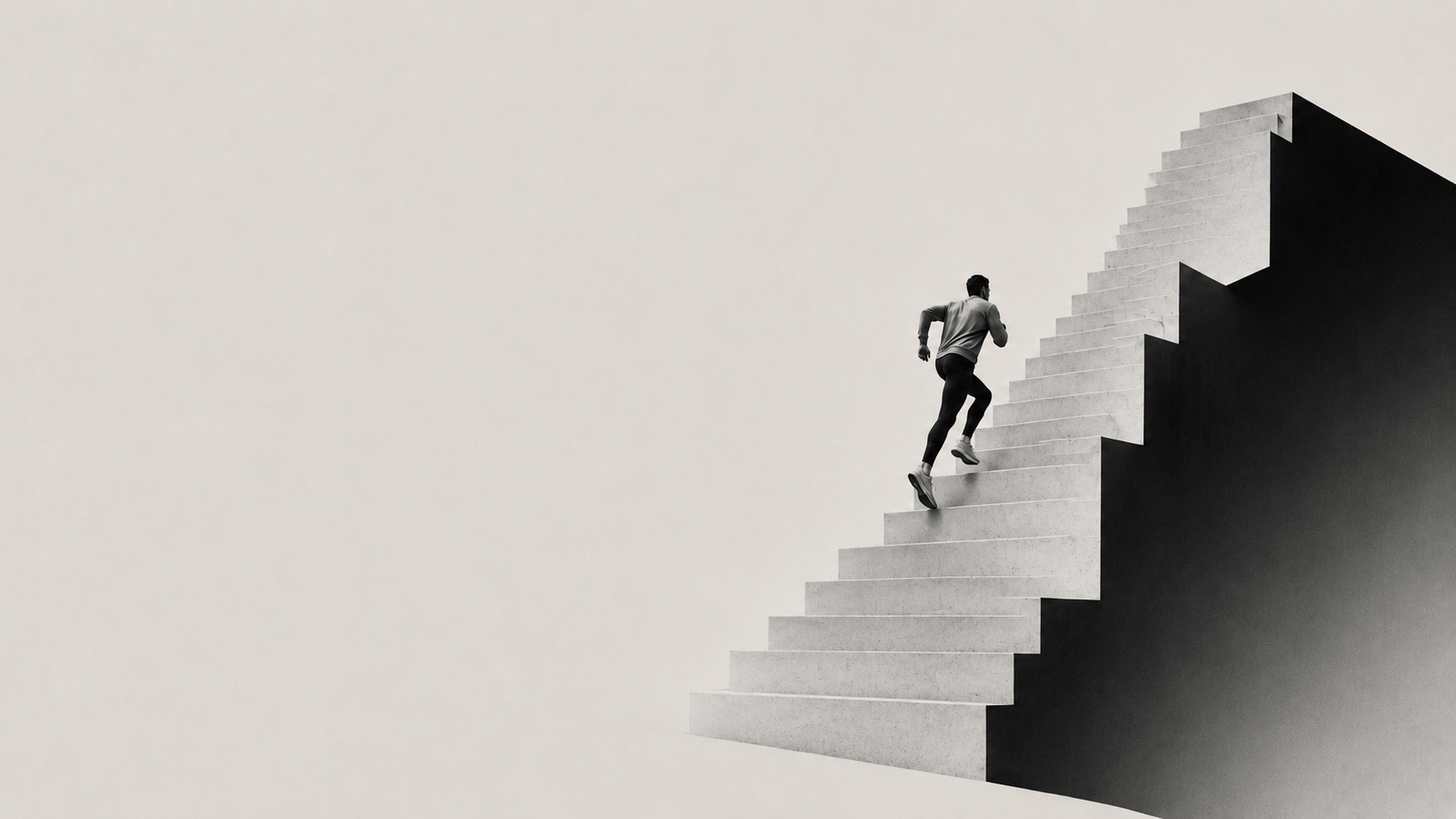
A runner climbing a monumental concrete staircase that rises into a dark block, a wide expanse of pale wall to the left.
Area 04  ·  Confidence & self-worth

The strongest performer, running on a doubt that praise cannot touch.

The people an organisation can least afford to lose are the ones a poster with a number on it never reaches.

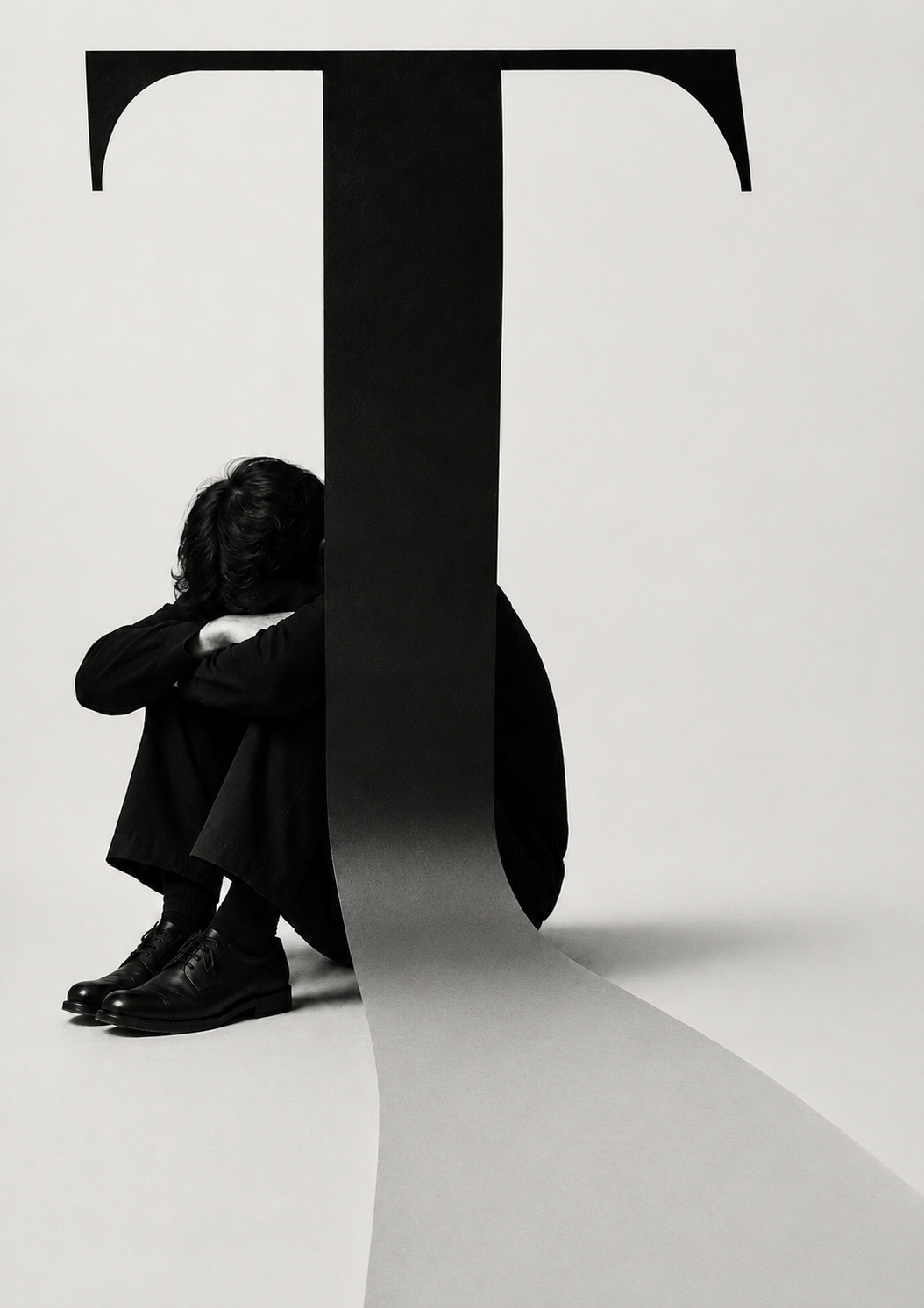
A person sitting curled and hidden at the foot of a towering letter T, the letter’s stem stretching away as a long shadow.

The person in your organisation most likely to burn out, least likely to ask for help, and hardest to reach with any standard provision is often your strongest performer. Not despite the competence — because of what sits under it. For a significant number of high-functioning people, the drive is load-bearing in a way that has little to do with the work: achievement is how they know they are enough, how they stay ahead of a quieter doubt about their own worth. They are visibly capable, often the most capable in the room. The capability is real. It simply never counts toward the verdict they hold about themselves.

This is the population a detection model never sees. They do not present as struggling. They over-deliver, they never take sick days, they are the safe pair of hands — and the whole arrangement runs on it: the good evidence drains away by morning and the bar resets rather than clearing.
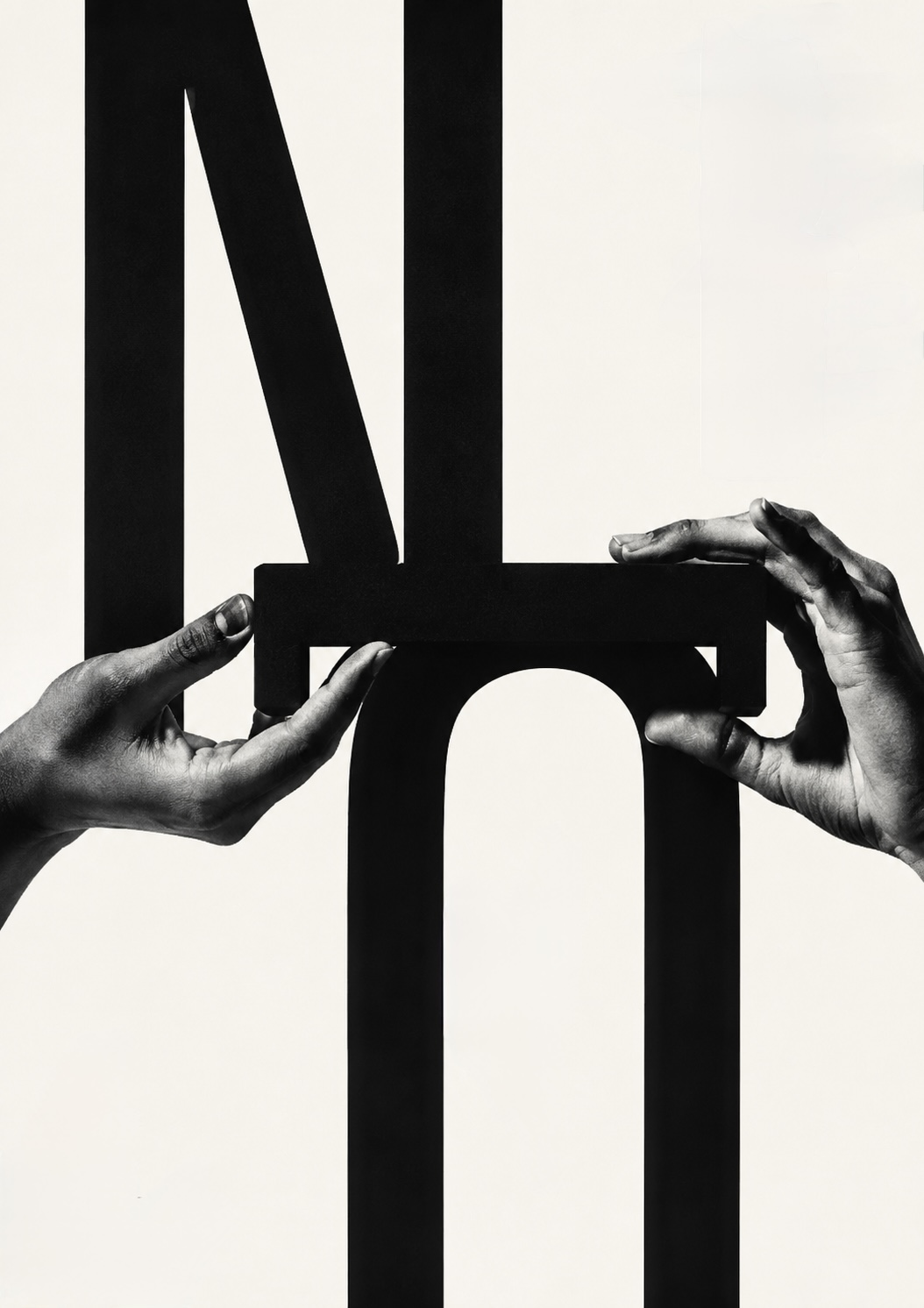

Two pairs of hands holding the disassembled strokes of a letter together, the safe pair of hands quietly keeping the whole shape standing.
A hand holding up a flawless mirror-polished sphere, its perfect surface catching the light while the effort of holding it stays hidden below.
From the outside it looks like excellence. From the inside it is a performance that cannot be allowed to stop.

A wellbeing offer built around helplines and crisis support is invisible to this person, because they will not define themselves as someone in difficulty until they are already in collapse. They are also the people whose absence costs the most when it finally comes, and it tends to come suddenly, because the performance was good enough that no one saw the depletion behind it.

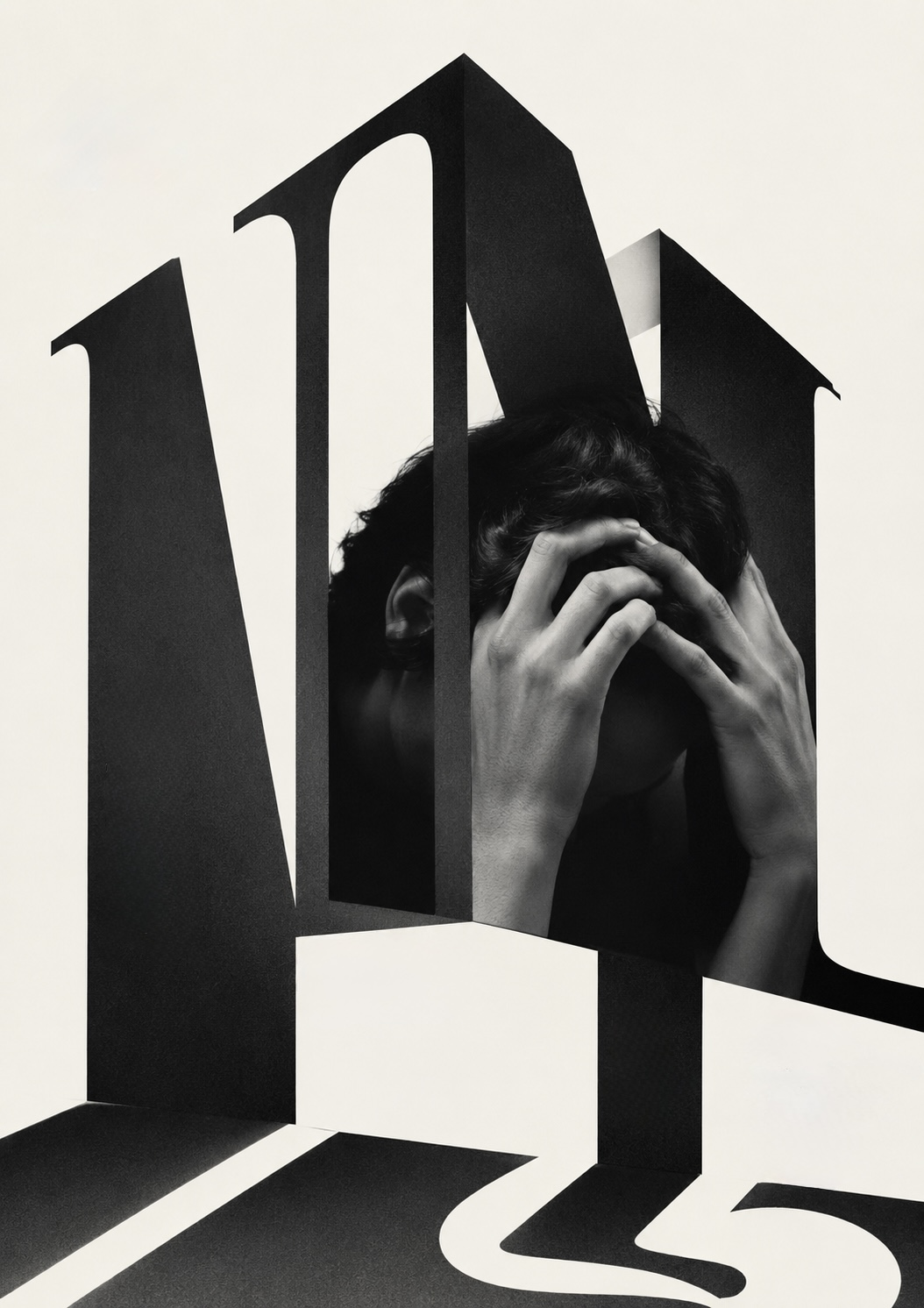
A figure with their head in their hands, half-hidden inside the strokes of monumental letters that both shelter and enclose them.
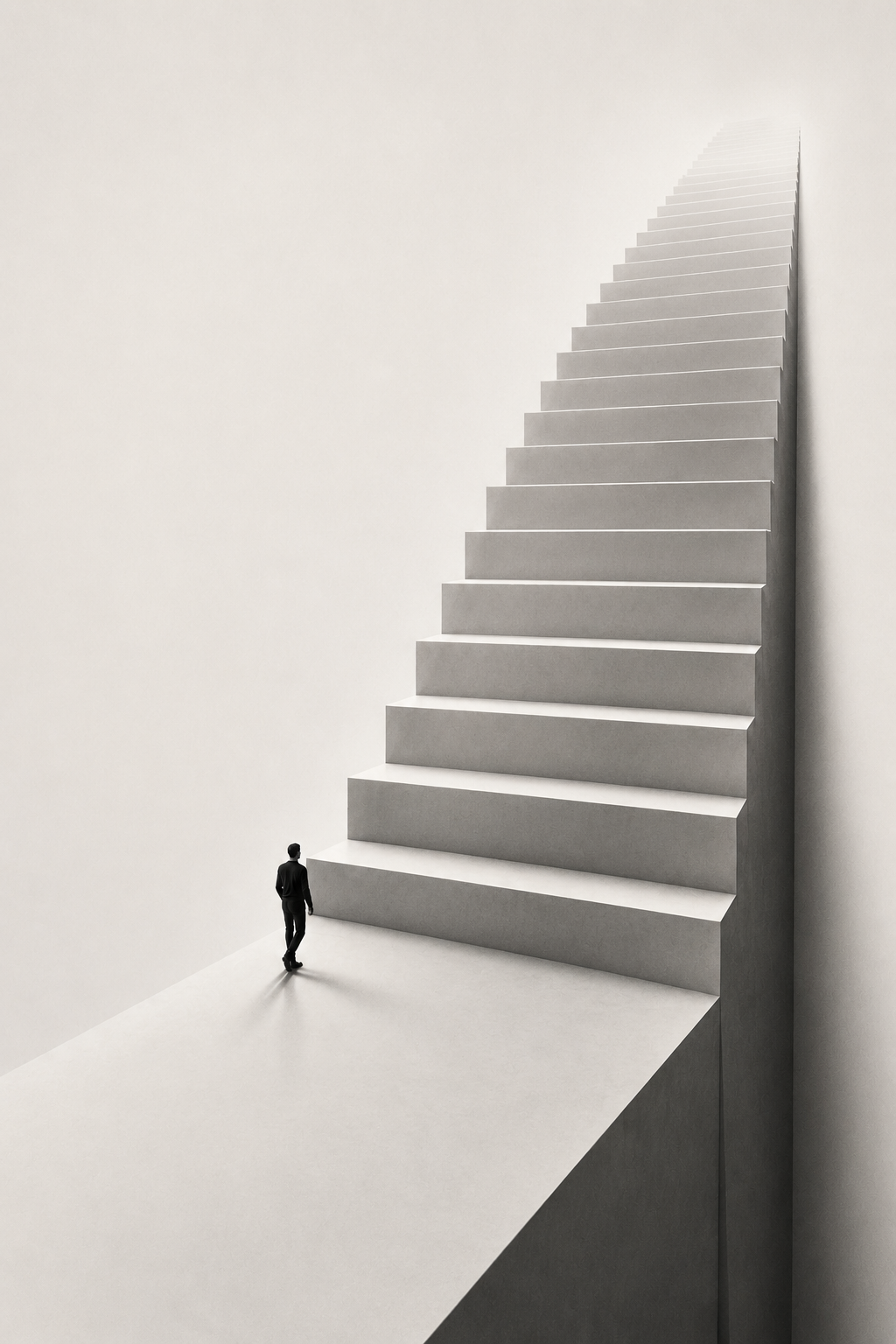
A small figure standing at the foot of a vast staircase that climbs and fades gently into light above.

Reaching them is not done by waiting for them to raise their hand. It is done by being present and trusted before there is a crisis — met in an ordinary context, known as a person rather than a service — so that the threshold for making contact is low enough to cross before things become urgent. And the work itself is not confidence-coaching. It is slower: the difference between being told you are worth something and beginning, gradually, to feel it from the inside, in a way that does not rise and fall with how the last quarter went.

The people you can’t see

For an organisation, this is the theme that reaches the people it can least afford to lose and can least easily see. It is also the one that most clearly separates a real relational offer from a poster with a number on it — because these are precisely the people a poster will never move.

Consultancy across London (117 Harley Street), Norwich, online and on-site.
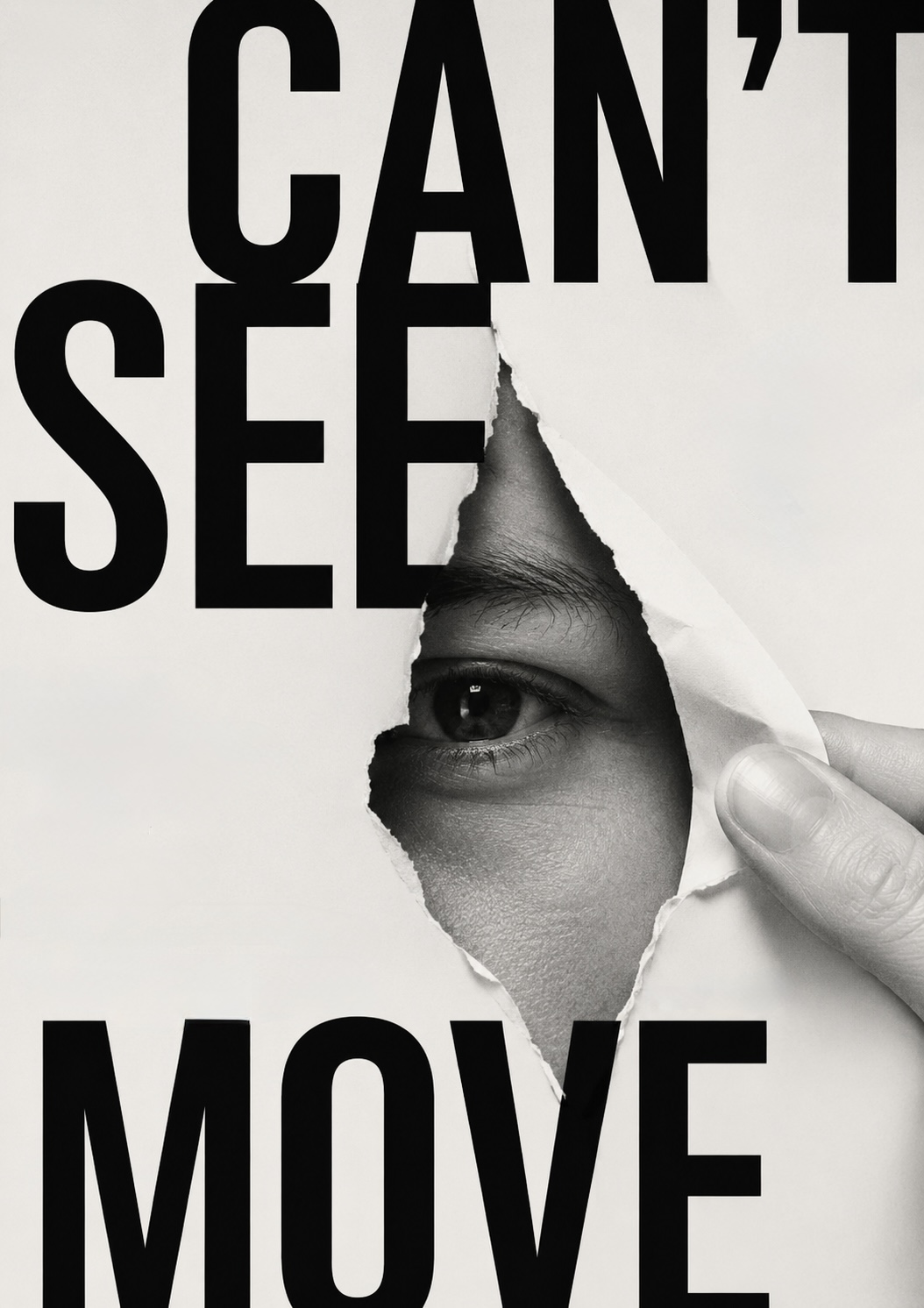
A single eye looking out through a jagged tear in a poster printed with the words ‘can’t see’ and ‘move’, a hand peeling the paper back.
A lone figure walking into the towering word ‘conversation’, the letters opening like a doorway of light.
Get in touch

Tell me where your provision sits.