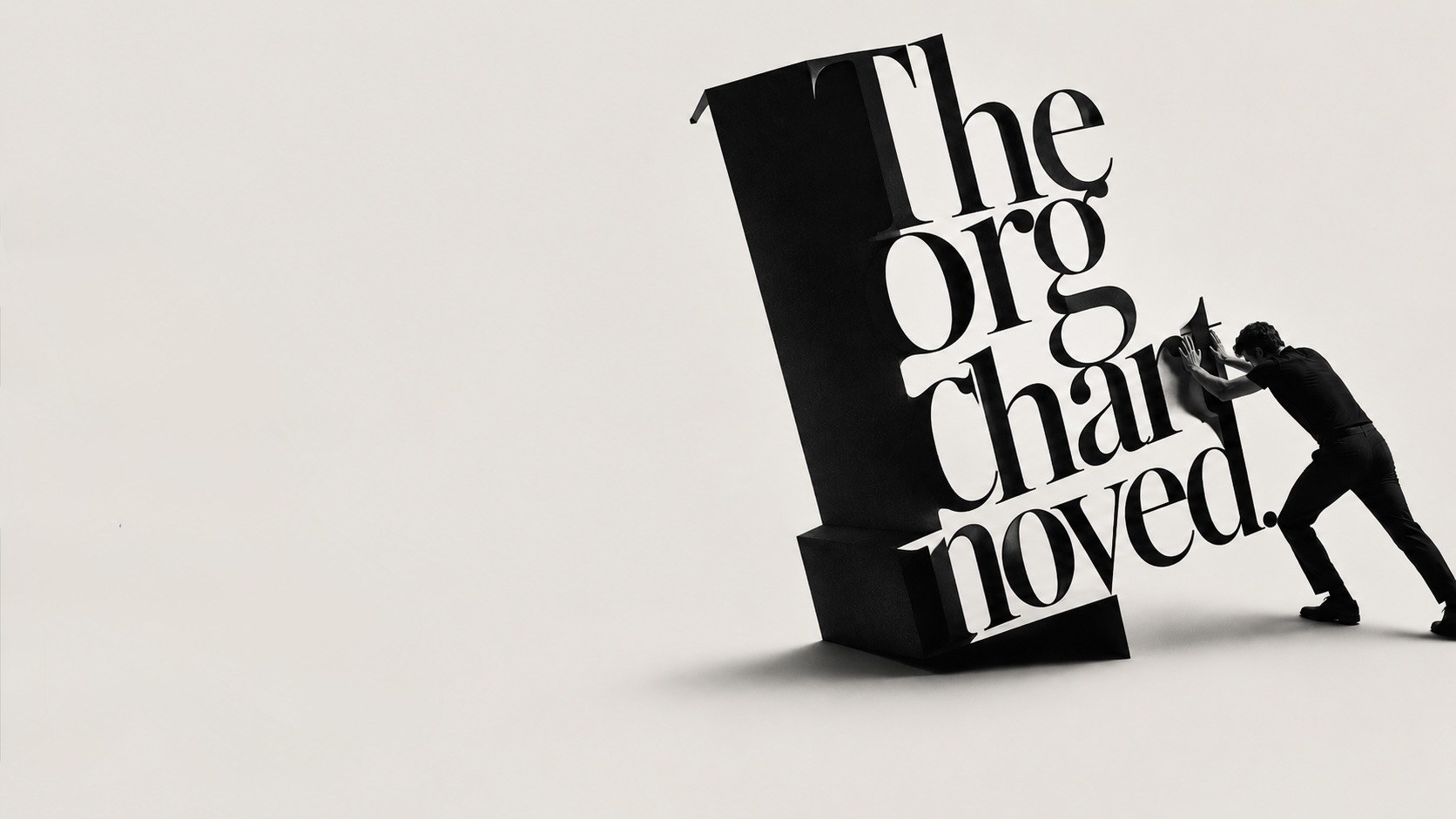
A man bracing to push the toppling three-dimensional words ‘The Org Chart moved.’ upright, a wide expanse of pale wall to the left.
Area 05  ·  Change & transition

The org chart moved. The people are still somewhere behind it.

The change happens either way. How it lands in the people is the buildable part.

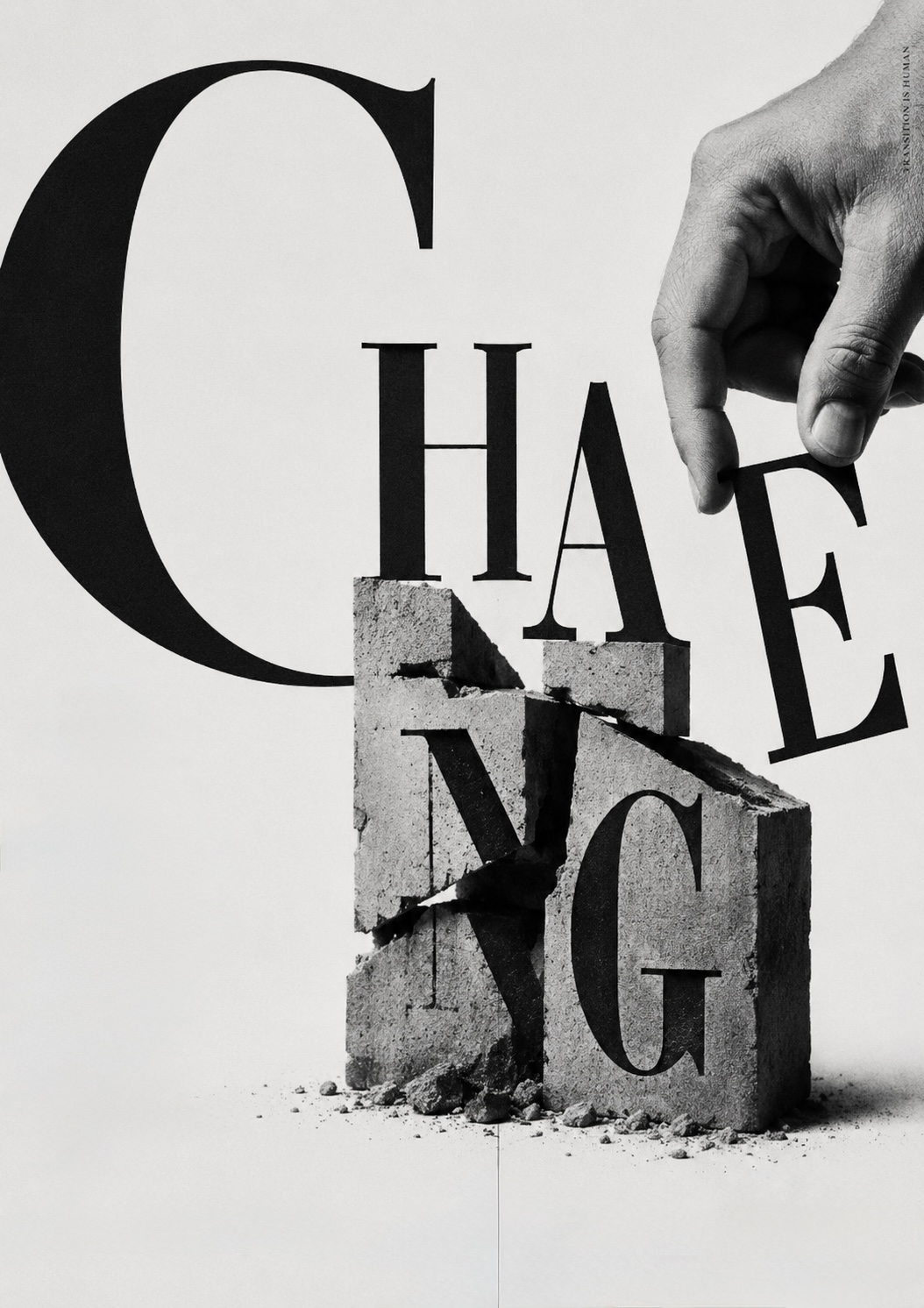
The word ‘change’ built partly from crisp type and partly from a crumbling concrete block, a hand lifting one letter away as the rest breaks apart; small caption reads ‘transition is human’.

Change is the founder's own territory as much as the staff's, which is part of why it is so often handled badly. Restructures, rapid growth, role changes, redundancies, mergers, a leader leaving — organisations treat these as logistical events and manage the logistics, while the thing that actually determines how they land goes unattended. A transition is not only a change of circumstance. It is a change in who people take themselves to be at work, and that part rarely keeps pace with the announcement.

This is why change that looks well-managed on paper still produces a dip no one quite predicted — the disengagement, the quiet exits, the drop in the willingness to bring anything more than the minimum. People are navigating a shift in identity and belonging while being asked to perform as though only the org chart moved. The one whose role was absorbed, the team that lost the manager they trusted, the person whose long chapter simply ended: the situation has moved and the self is still somewhere behind it, looking for ground that has shifted.
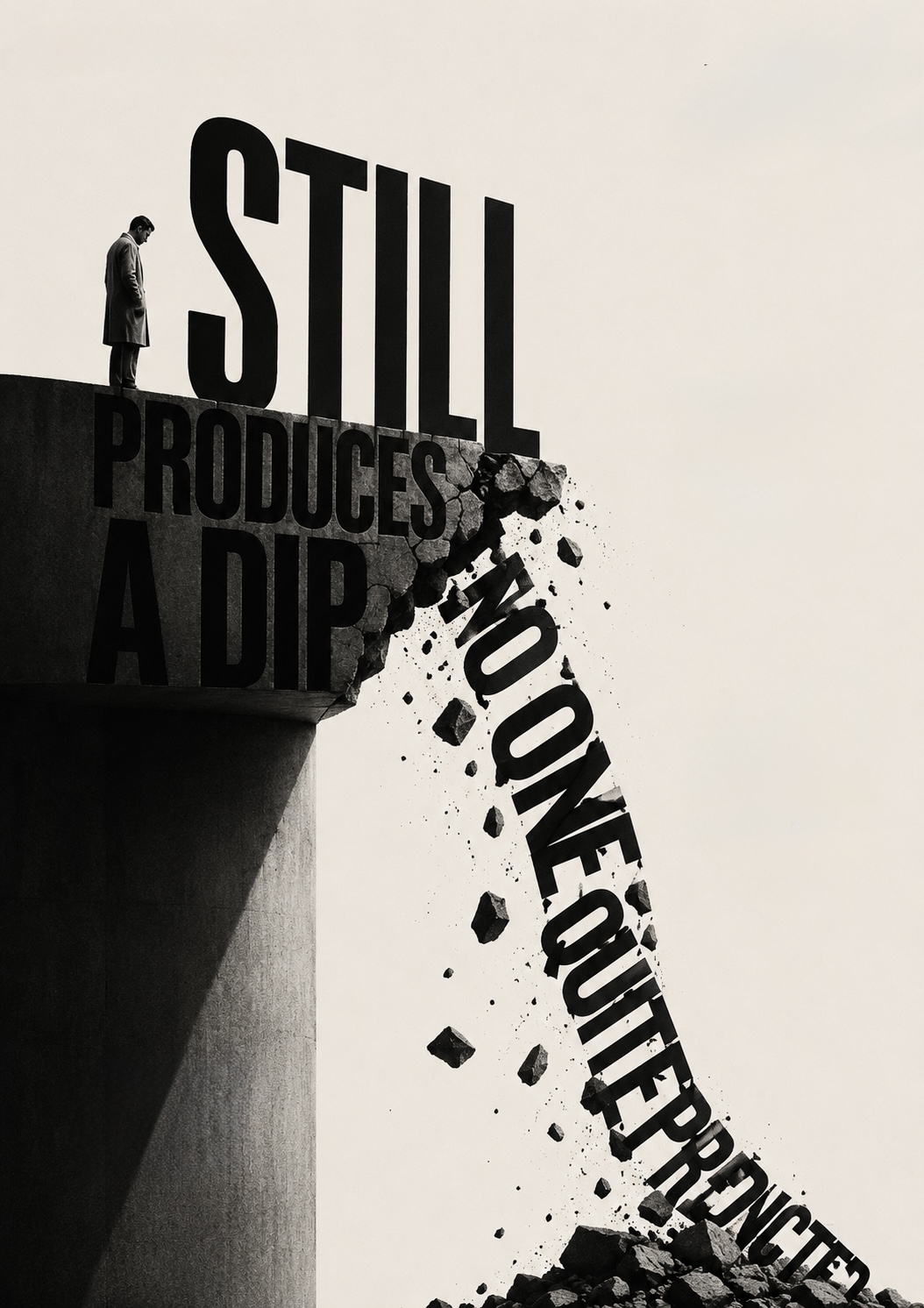
A figure standing at the edge of a concrete ledge whose lettered face — ‘still produces a dip no one quite predicted’ — crumbles and pours away into rubble below.
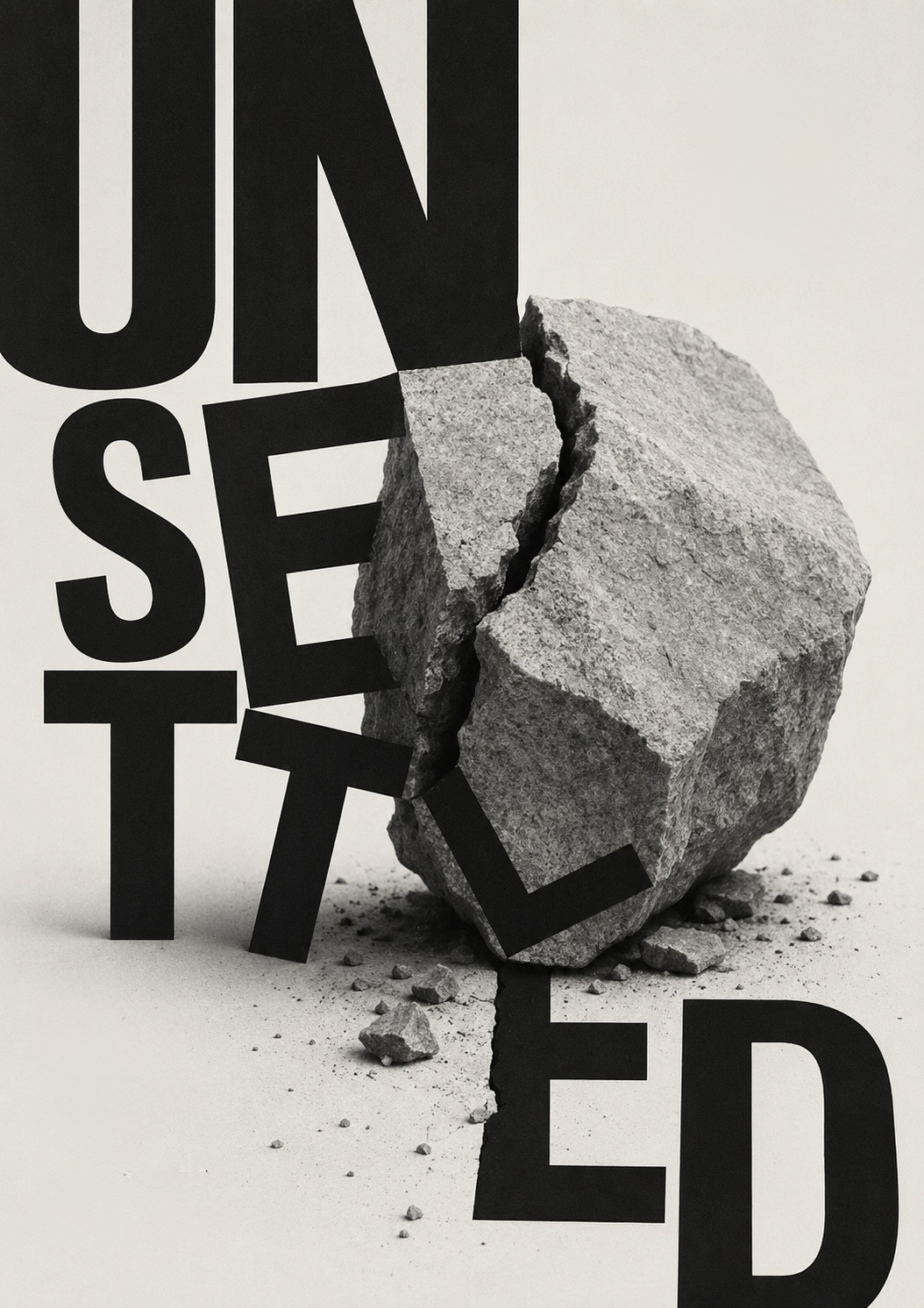
The word ‘unsettled’ set in tall type, its middle letters displaced and toppling as a heavy stone splits and crumbles through them.

The usual response is a comms plan and a reassurance that everything will settle. It does not reach the actual difficulty, because the difficulty is not informational. They are unsettled because something they were oriented around has gone, and the loss in that — even when there is genuine gain alongside it — needs acknowledgement rather than being hurried past. Rushing it usually prolongs it.
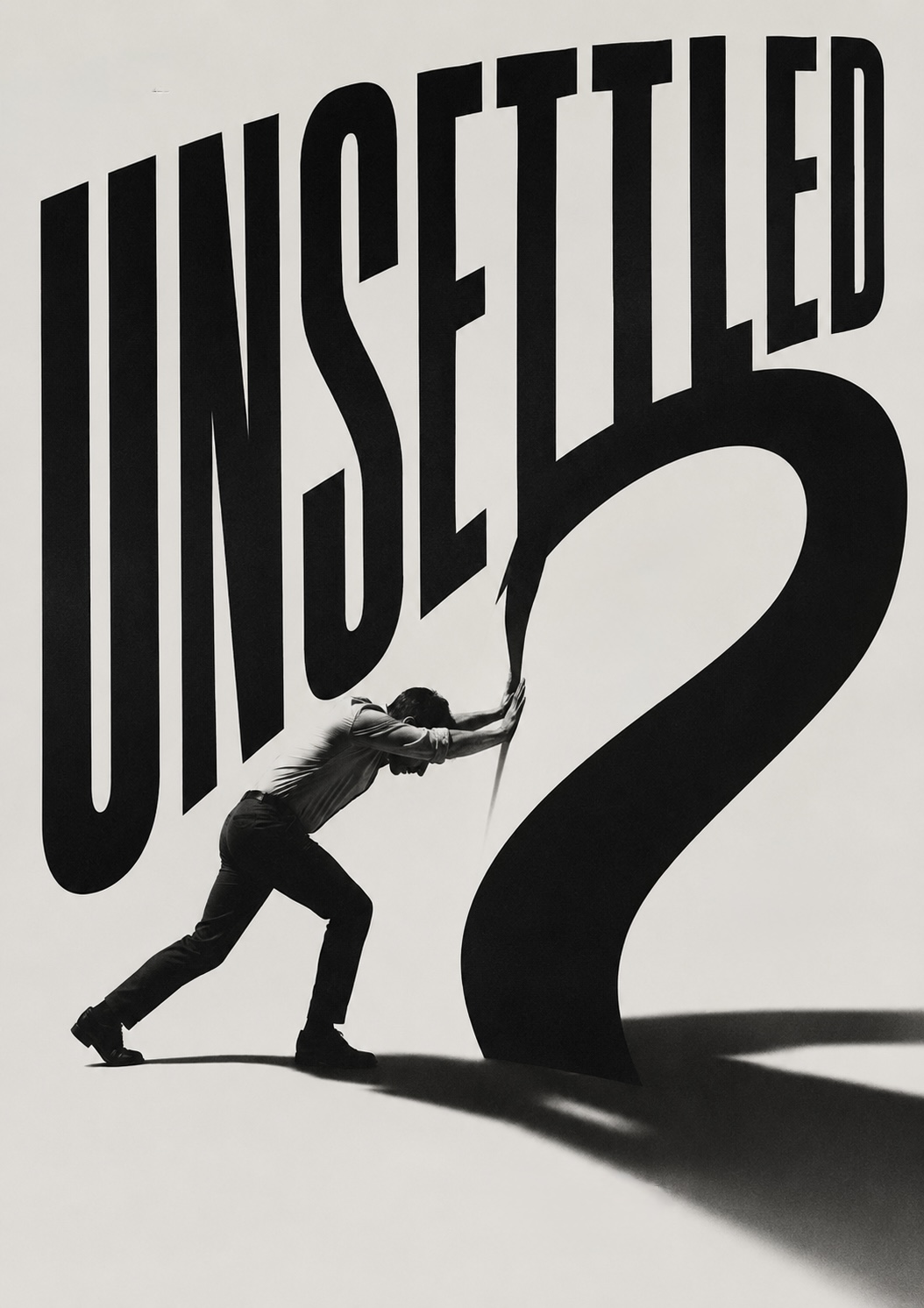
A figure leaning hard into the towering word ‘unsettled’, pushing it forward until its tail curls into a question mark.
People are not unsettled because they lack information.

Real work through a transition makes room for what is actually happening: somewhere the disorientation can be felt and thought about without having to be resolved on the timeline the change demands. That is not about slowing the business down. It is about not paying, months later, for a transition that was pushed through the people rather than worked through with them. People find their footing, and they find it more readily when the human reality of the change is held rather than managed around.

A figure in dark clothing walking through a doorway cut into a vast pale wall, one edge of the opening torn and rough, the other clean, passing from one space into the next.
What’s buildable

For an organisation, this is the theme that determines whether a period of change costs you your best people or brings them through with you. The change is going to happen either way. What is buildable is whether it is survived or metabolised.

Consultancy across London (117 Harley Street), Norwich, online and on-site.
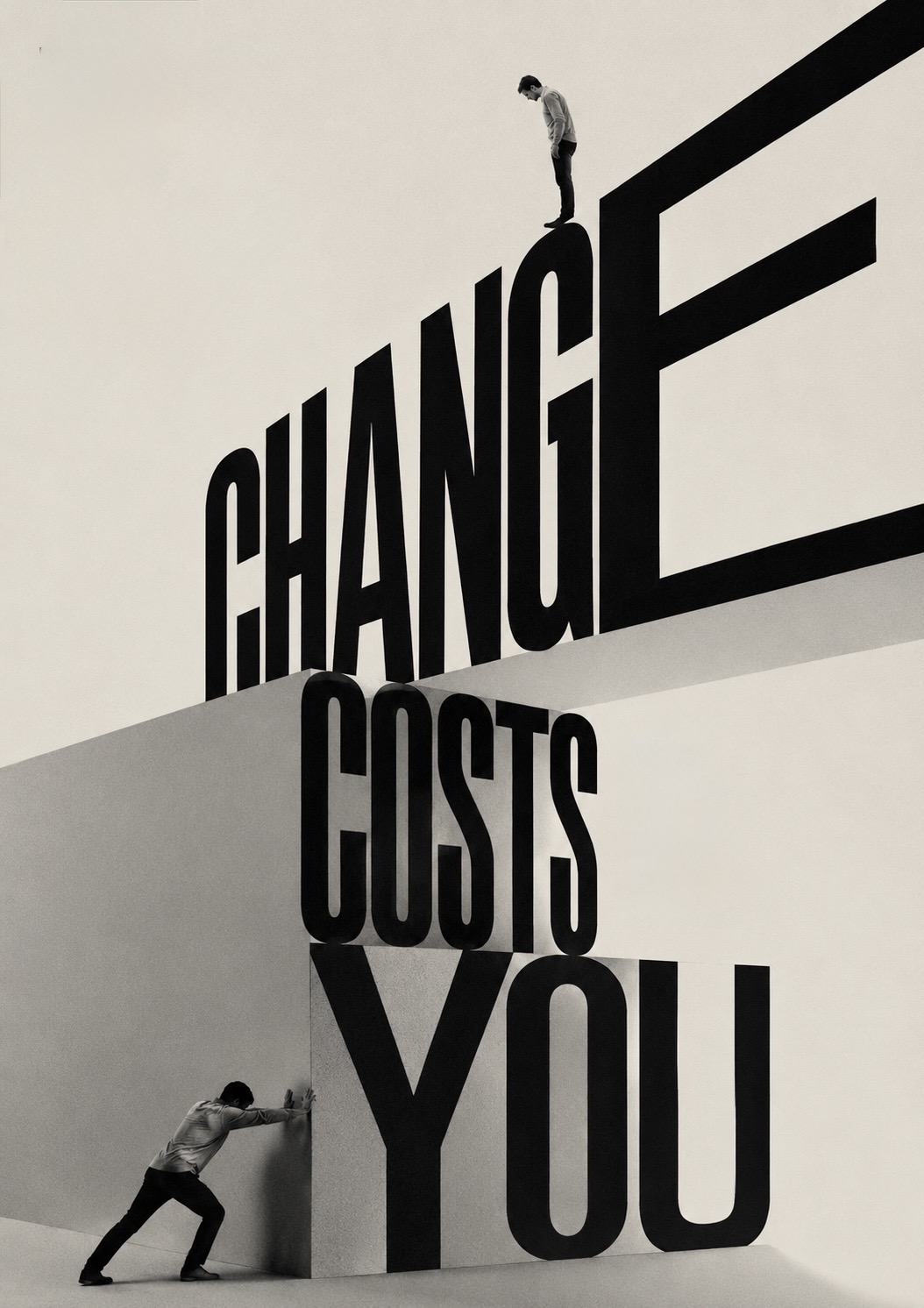
Two figures against the monumental words ‘change costs you’ — one bracing to push a heavy block bearing the word, another standing wearily at the top of the letters.
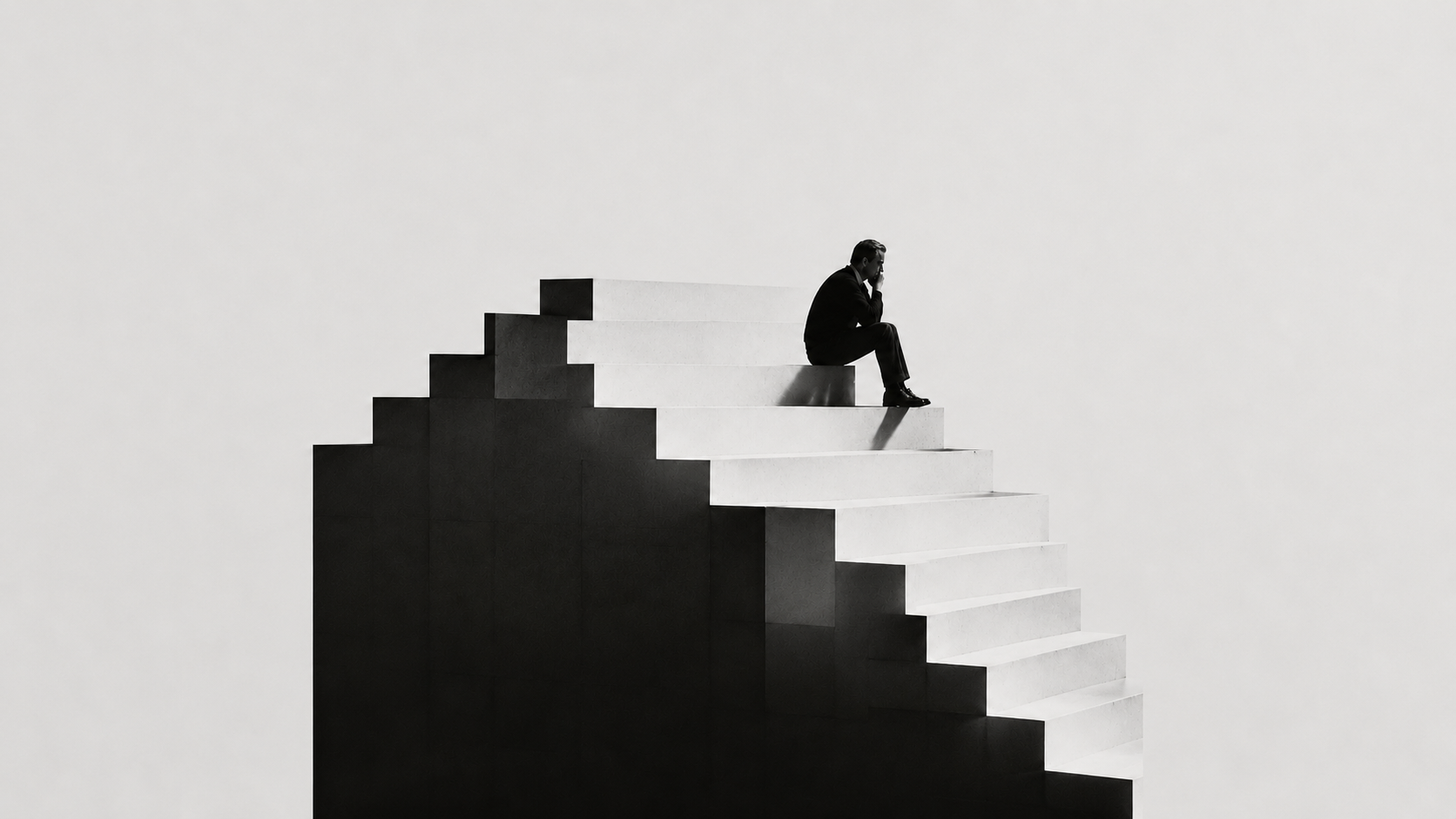
A figure sitting alone on a broad flight of pale steps that rise out of a dark block, pausing part-way up.
Get in touch

Tell me where your provision sits.