The danger has passed. Something in you hasn’t heard.
How I can help

The danger has passed. Something in you hasn't heard.

Area 09 · Earlier Experiences & Trauma

The danger has passed. Something in you hasn't heard.

What could not be felt at the time does not simply fade. This is somewhere it can begin to be met, at a pace that stays yours.

What it can feel like

Trauma is not always the thing people expect it to be.
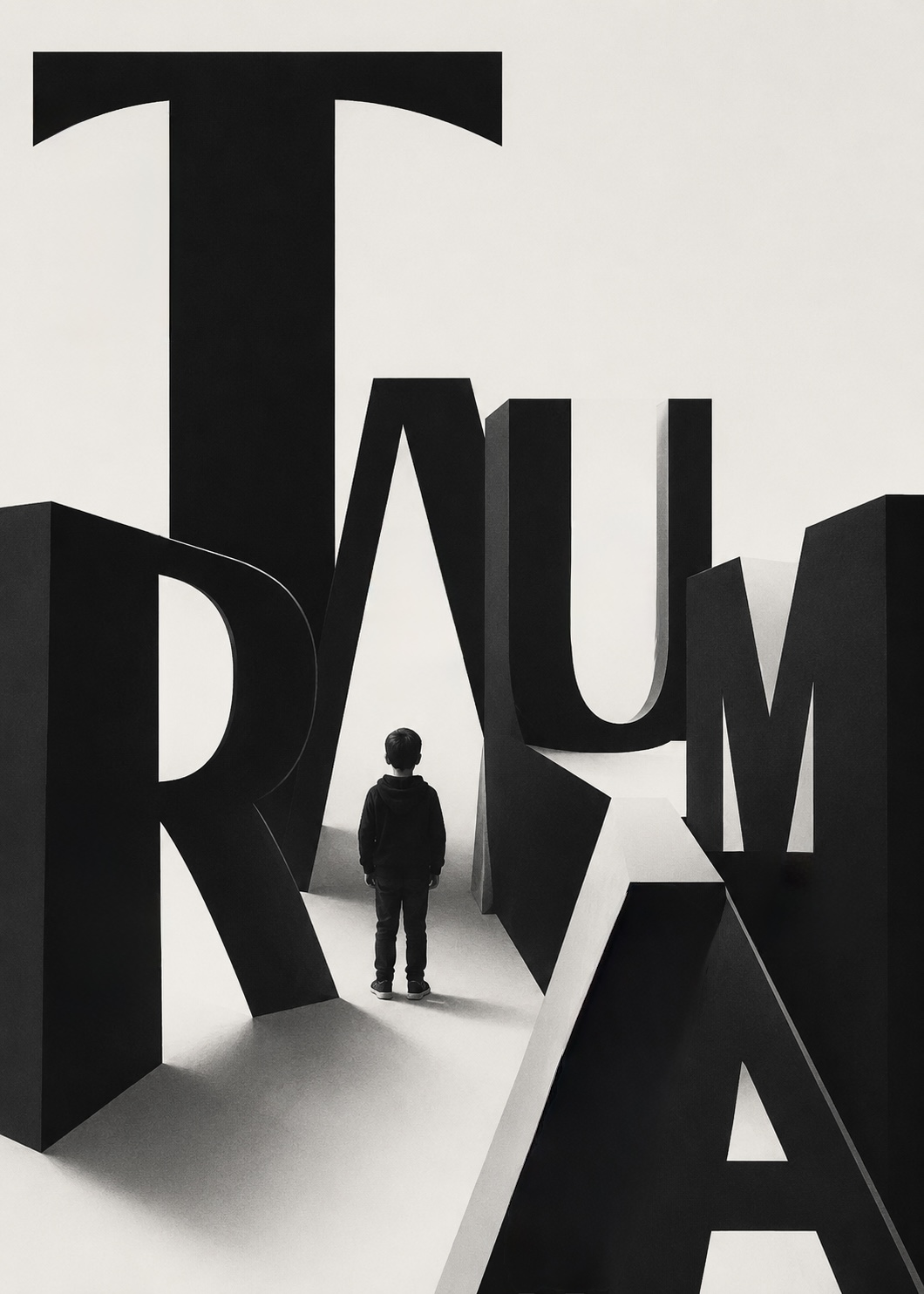
A small child stands alone amid the monumental toppled letters of the word TRAUMA — trauma is not always the thing people expect it to be.

Trauma is not always the thing people expect it to be. It is easy to assume the word belongs only to single, dramatic events, and for some people it does. But for many, what they carry came from something longer and quieter: an early environment that was frightening, unpredictable, or unsafe in ways that were never named, a childhood spent managing a situation no child should have had to manage, a pattern of experiences that never amounted to one nameable event and yet shaped everything that came after.

This is why the effects can be confusing.
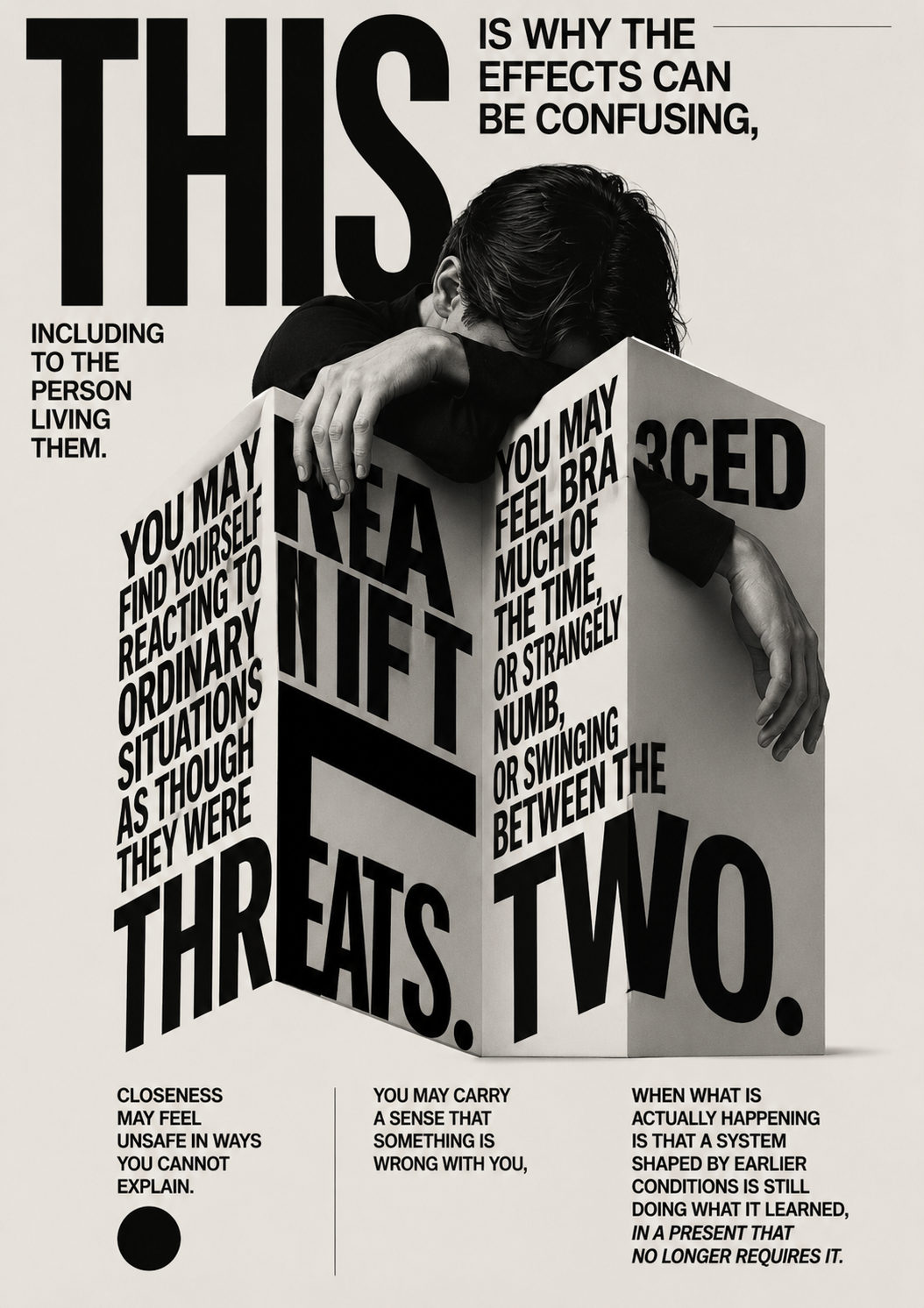
A figure buries their head against a folding paper structure printed with the words 'this is why the effects can be confusing… you may feel braced much of the time, or strangely numb, or swinging between the two… a system shaped by earlier conditions is still doing what it learned, in a present that no longer requires it.'

This is why the effects can be confusing, including to the person living them. You may find yourself reacting to ordinary situations as though they were threats. You may feel braced much of the time, or strangely numb, or swinging between the two. Closeness may feel unsafe in ways you cannot explain. You may carry a sense that something is wrong with you, when what is actually happening is that a system shaped by earlier conditions is still doing what it learned, in a present that no longer requires it.

Where it comes from

What could not be metabolised then does not simply fade.

A figure sits curled inside the cracked, broken letters of the word TRAUMA — what could not be metabolised then does not simply fade; it stays, held in the body.

What these experiences have in common is not the size of the event but what it did. Trauma is what happens when an experience overwhelms your capacity to bear it at the time. There was too much to feel, and no one there to help you feel it, so the only option was to survive it rather than process it. What could not be metabolised then does not simply fade. It stays, held in the body and the nervous system, often outside of clear memory, continuing to shape how safe the present feels long after the event itself is over.

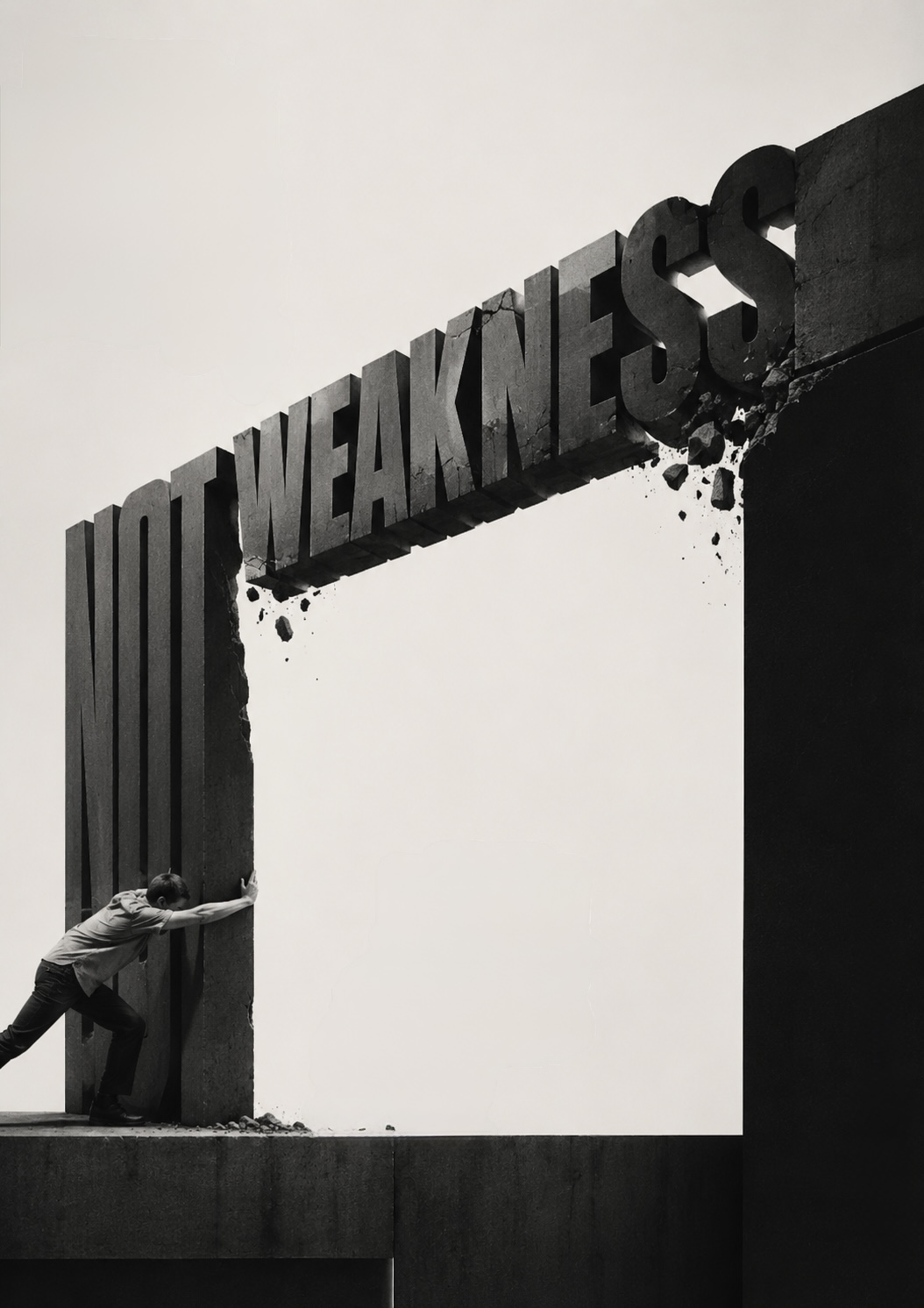
None of this is weakness, and none of it is your fault.

A person braces their whole body to hold up the monumental words NOT WEAKNESS as the letters crack and crumble at one end — none of this is weakness, and none of it is your fault.

It is worth saying clearly that none of this is weakness, and none of it is your fault. What looks like overreaction, or shutdown, or difficulty trusting, is the trace of an intelligent adaptation, a way of surviving something real. The responses made complete sense in the conditions that formed them. The difficulty now is that they have outlived those conditions, and continue to run in a life that is no longer the one they were built for.

At a pace that stays yours

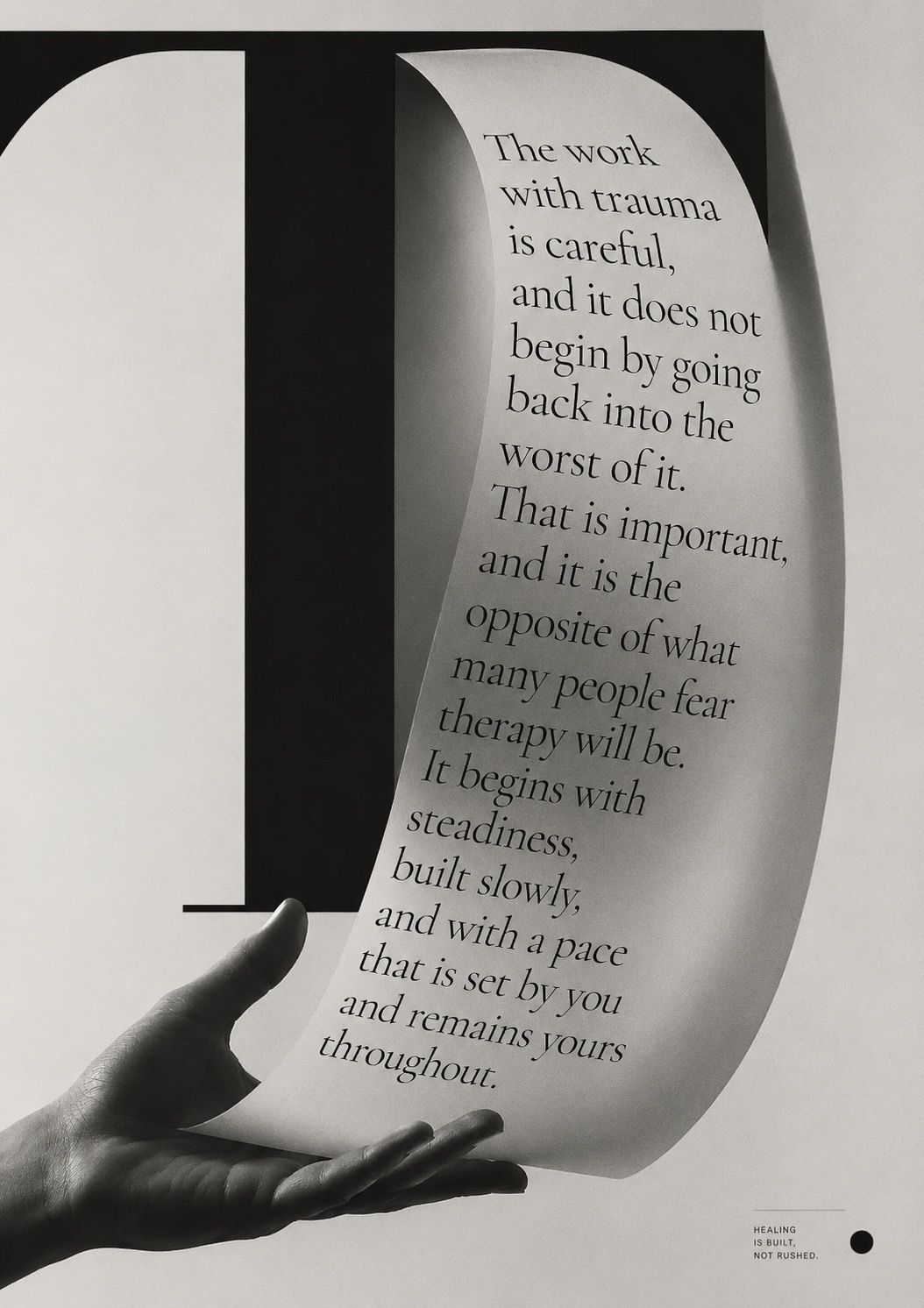
The work is careful, and it does not begin by going back into the worst of it.

A hand holds up a curling ribbon of paper printed with the words 'the work with trauma is careful, and it does not begin by going back into the worst of it… a pace that is set by you and remains yours throughout' beside a monumental serif letter — healing is built, not rushed.

The work with trauma is careful, and it does not begin by going back into the worst of it. That is important, and it is the opposite of what many people fear therapy will be. It begins with steadiness, built slowly, and with a pace that is set by you and remains yours throughout. Only from that ground does it become possible to let what was never processed finally be felt and integrated.

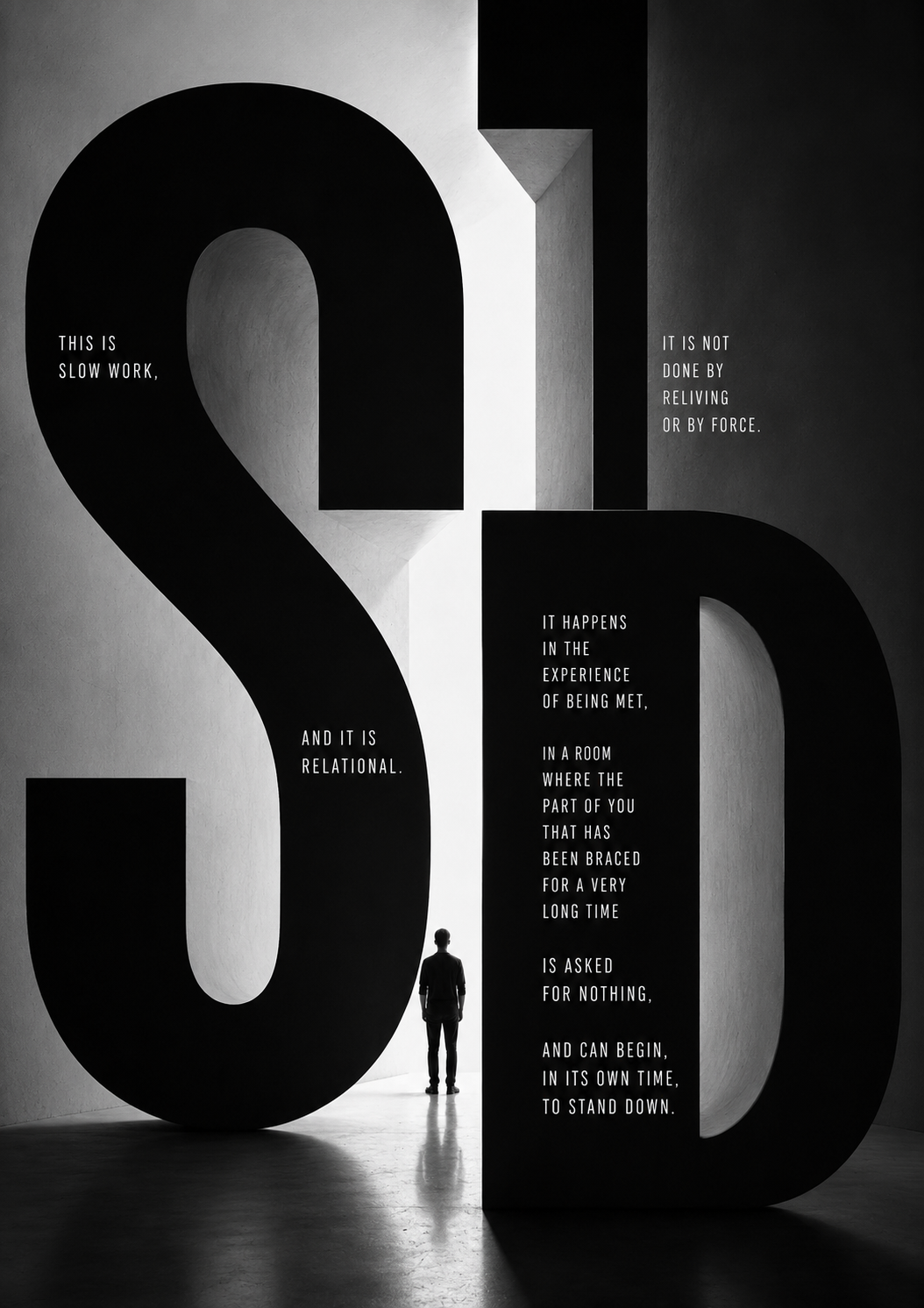
This is slow work, and it is relational.

A lone figure stands between two monumental letters S and D in a vast concrete hall, the walls printed with the words 'this is slow work, and it is relational… the part of you that has been braced for a very long time is asked for nothing, and can begin, in its own time, to stand down.'

This is slow work, and it is relational. It is not done by reliving or by force. It happens in the experience of being met, in a room where the part of you that has been braced for a very long time is asked for nothing, and can begin, in its own time, to stand down.

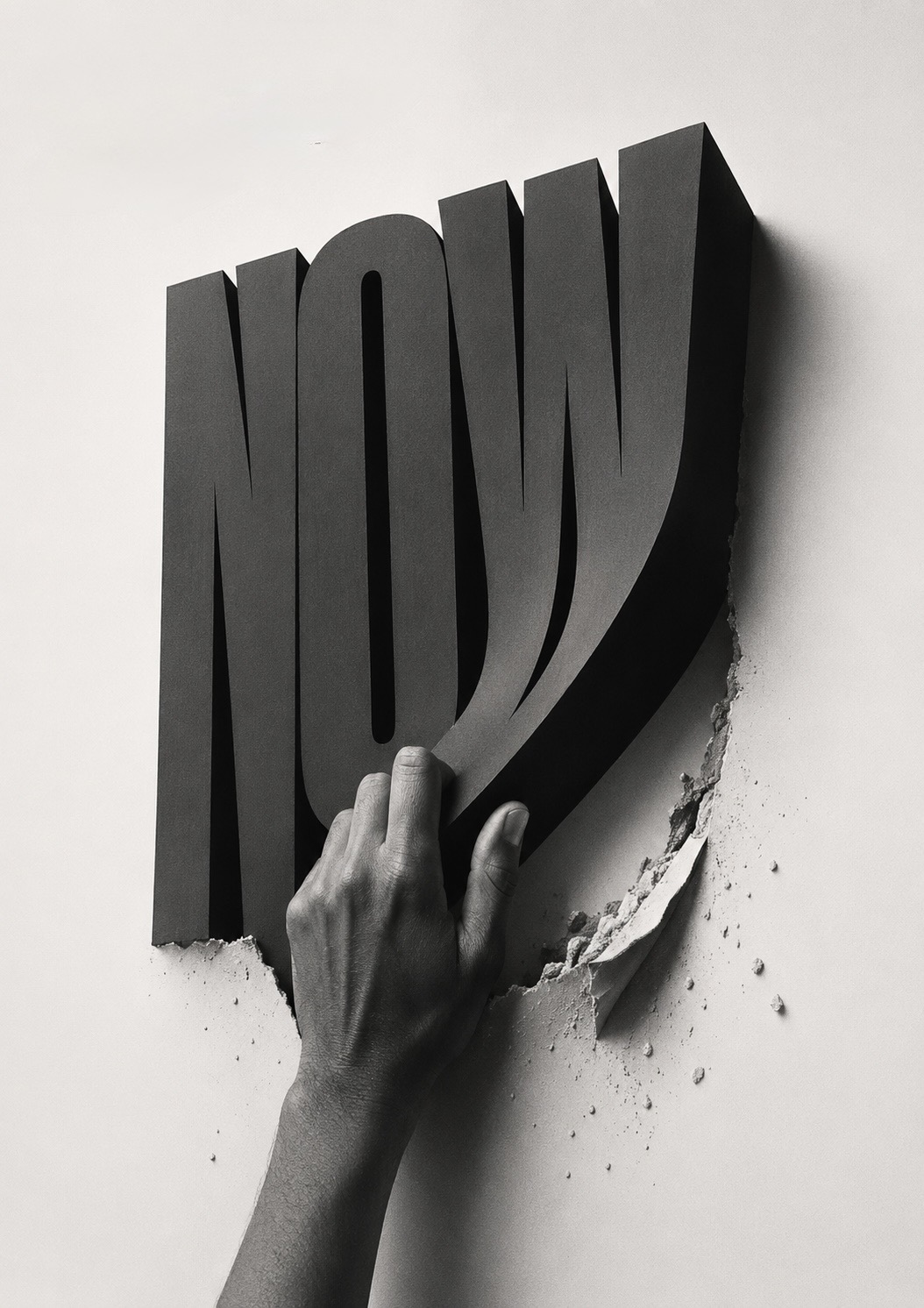
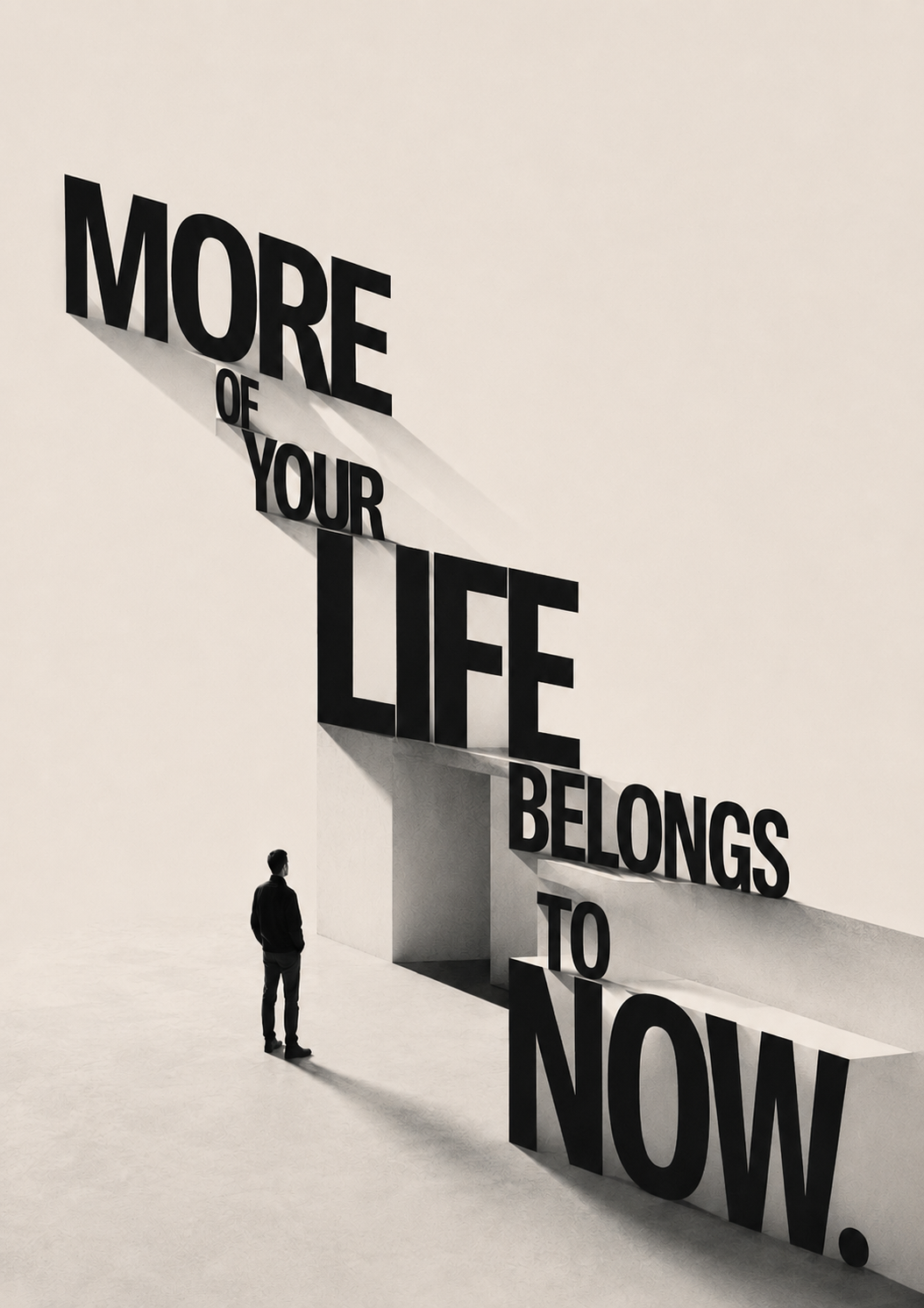
So that more of your life belongs to now.

A hand peels back the plaster of a wall to reveal the monumental word NOW beneath — the aim is to loosen the grip of the past on the present, so that more of your life belongs to now.

The aim is not to erase what happened. It cannot be undone. It is to loosen its grip on the present, so that more of your life belongs to now.

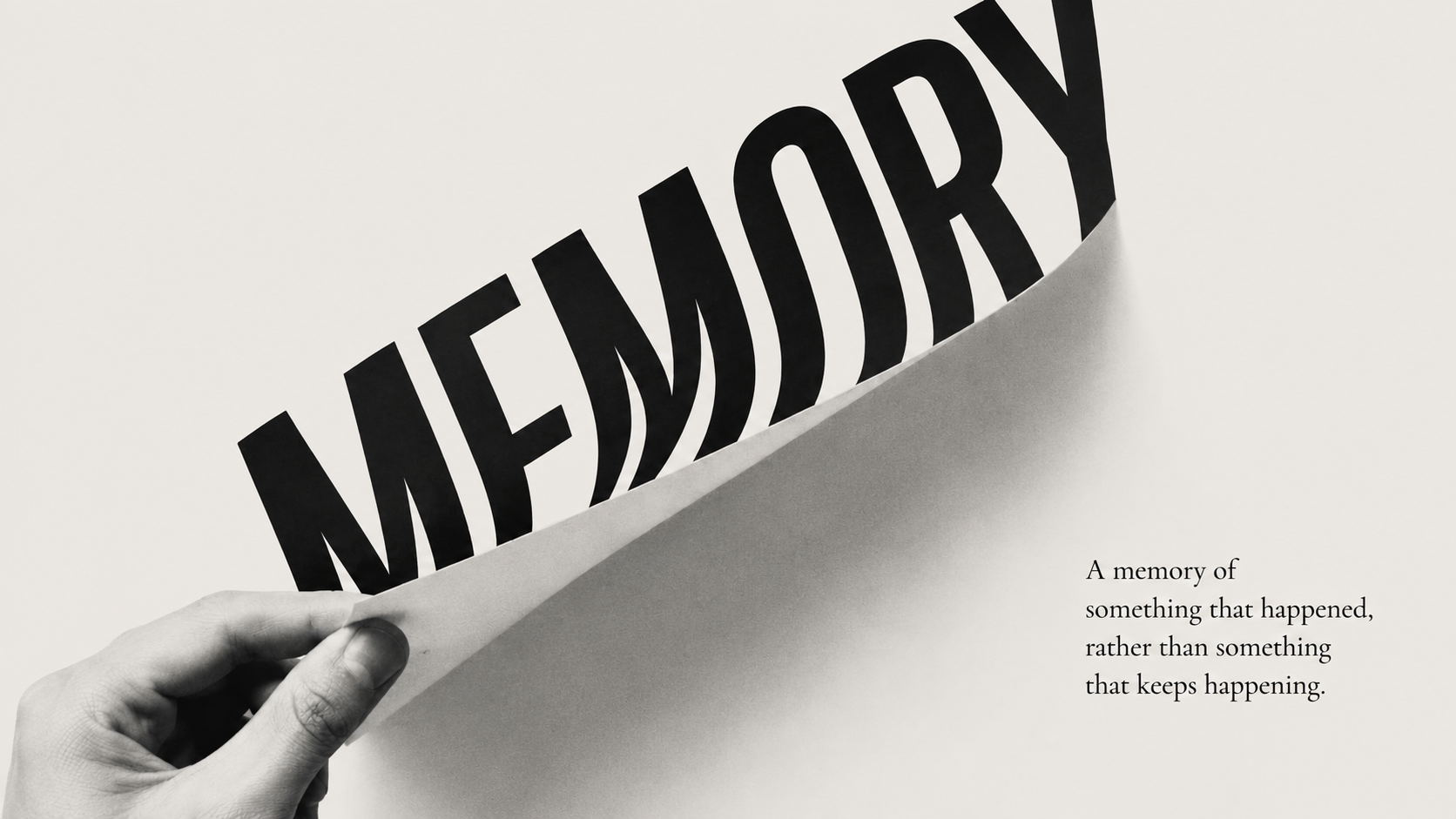
A memory of something that happened, rather than something that keeps happening.
If something from earlier is still here

Worth taking seriously rather than carrying alone.

If something from earlier is still shaping how the present feels, that is worth taking seriously rather than carrying alone.

I work with the impact of earlier experiences and trauma from 117 Harley Street, in Norwich, and online.
More of your life belongs to now.