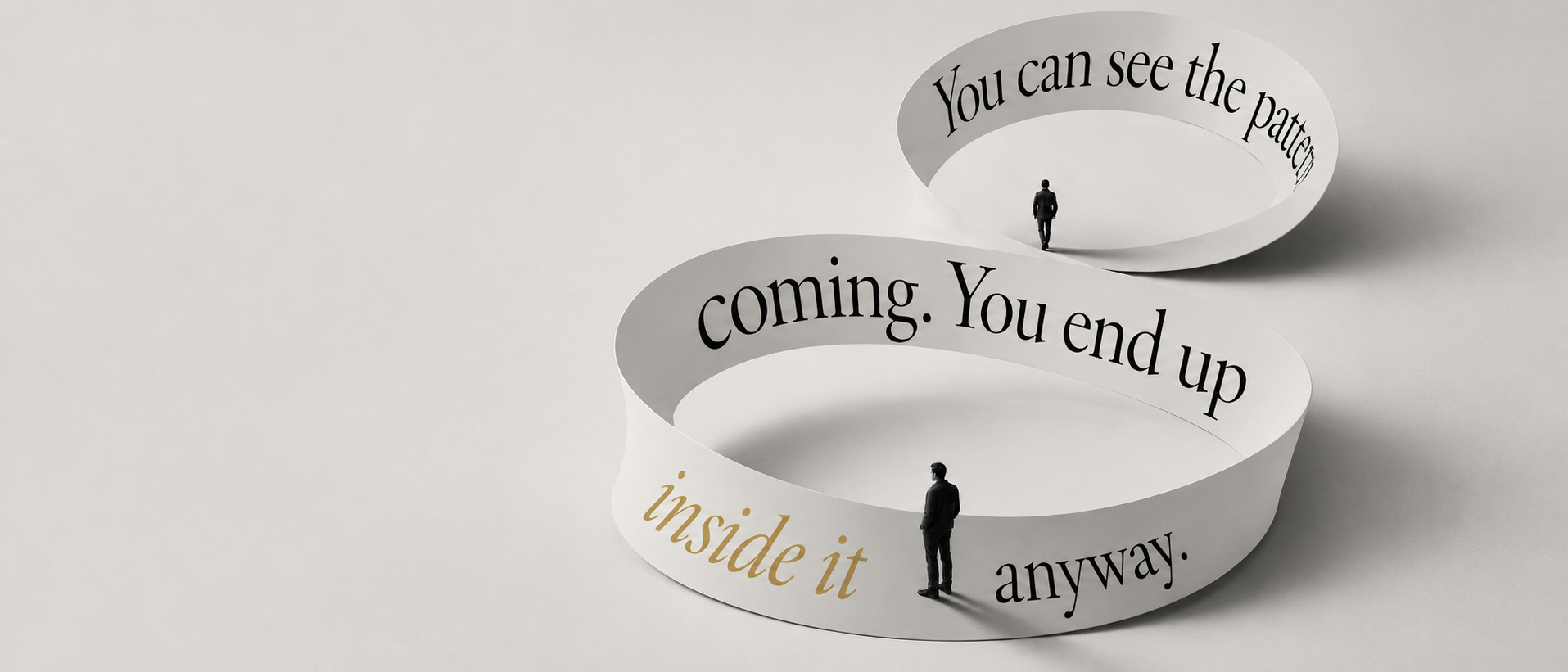
A figure-eight loop of paper reading ‘You can see the pattern coming. You end up inside it anyway’, with two small figures walking its track.
How I can help

Relationships — you can see the pattern coming, and end up inside it anyway.

Area 02 · Relationships

You can see the pattern coming. You end up inside it anyway.

Seeing how it works hasn’t been enough to change it — and that isn’t a failure of effort or insight. There can be somewhere to set it down that isn’t about working out whose fault it is.

What it can feel like

A closeness that now feels like reaching across a widening distance.

Two figures stand on opposite clifftops separated by a deep chasm, the near edge of one crumbling away into the void — a closeness that now feels like reaching across a distance that keeps widening.

Most people who come to talk about a relationship have already noticed the pattern. The same argument in different clothes. The conversation that stalls in the same place every time. A closeness that was once easy and now feels like reaching across a distance that keeps widening.

You can describe the pattern perfectly. It changes nothing.
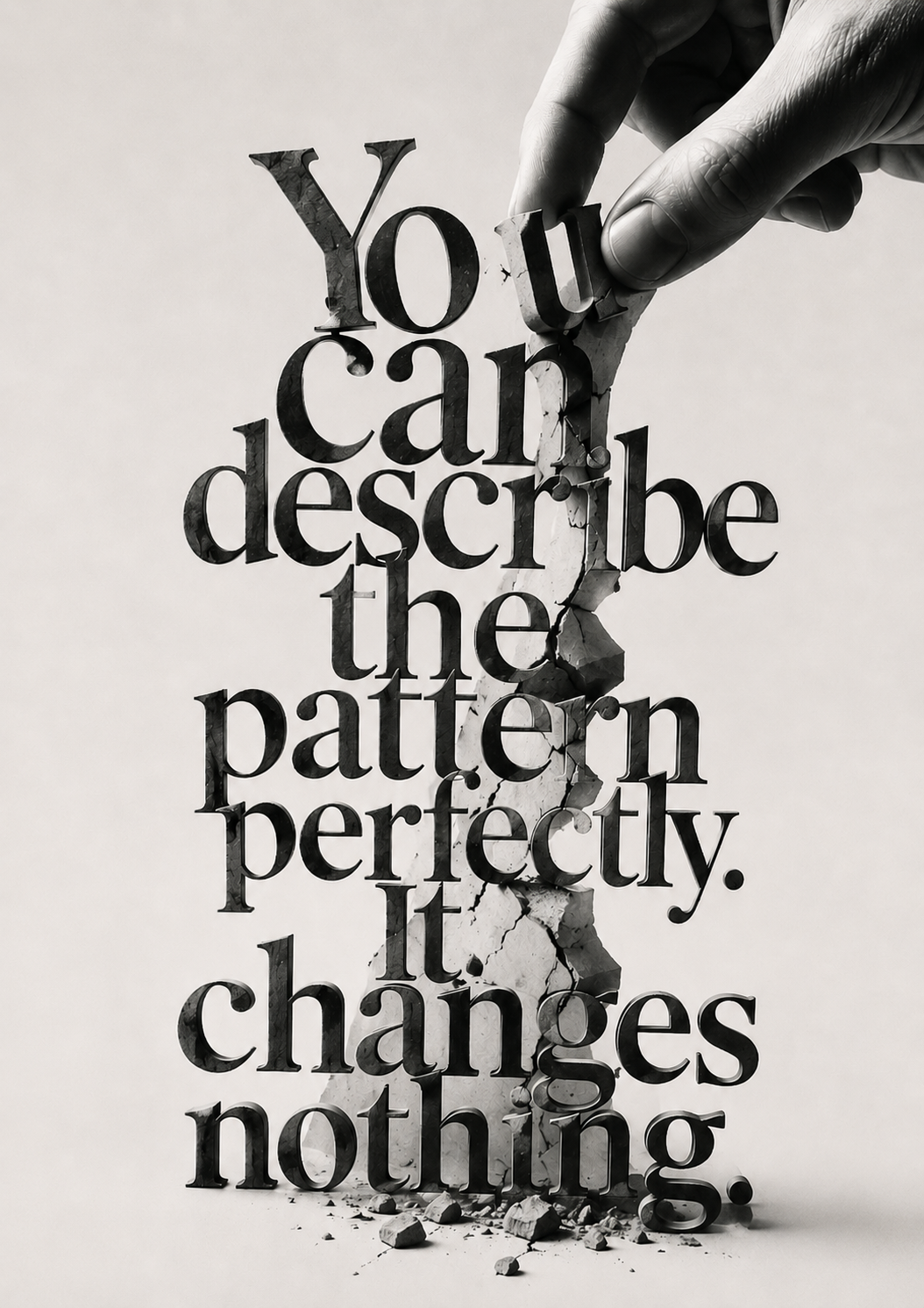
A hand lifting a cracking letter from the stacked words ‘You can describe the pattern perfectly. It changes nothing.’

You can usually name it in detail — who says what, where it turns, how it ends — and still find yourself back inside it the next time, watching it unfold from a distance you can’t quite close.

Understanding completely and ending up in the same place anyway.
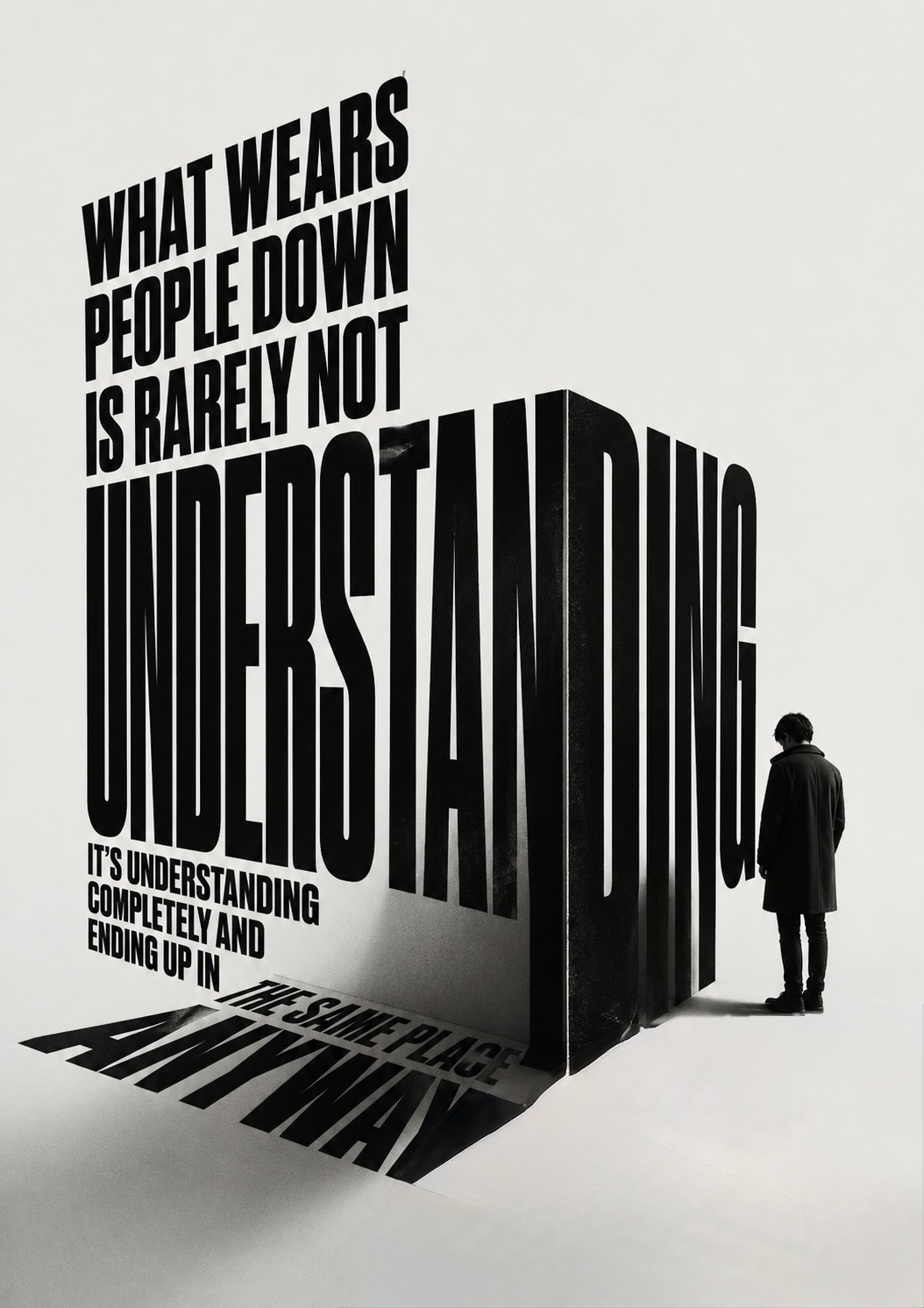
A lone figure faces a monumental three-dimensional block of type reading ‘what wears people down is rarely not UNDERSTANDING — it’s understanding completely and ending up in the same place anyway’, its lower words cast as shadow across the floor.

What wears people down is rarely not understanding. It’s understanding completely and ending up in the same place anyway — no longer sure whether it’s you, or them, or something between the two that won’t hold still long enough to look at.
Area 02 · Relationships

Common experiences

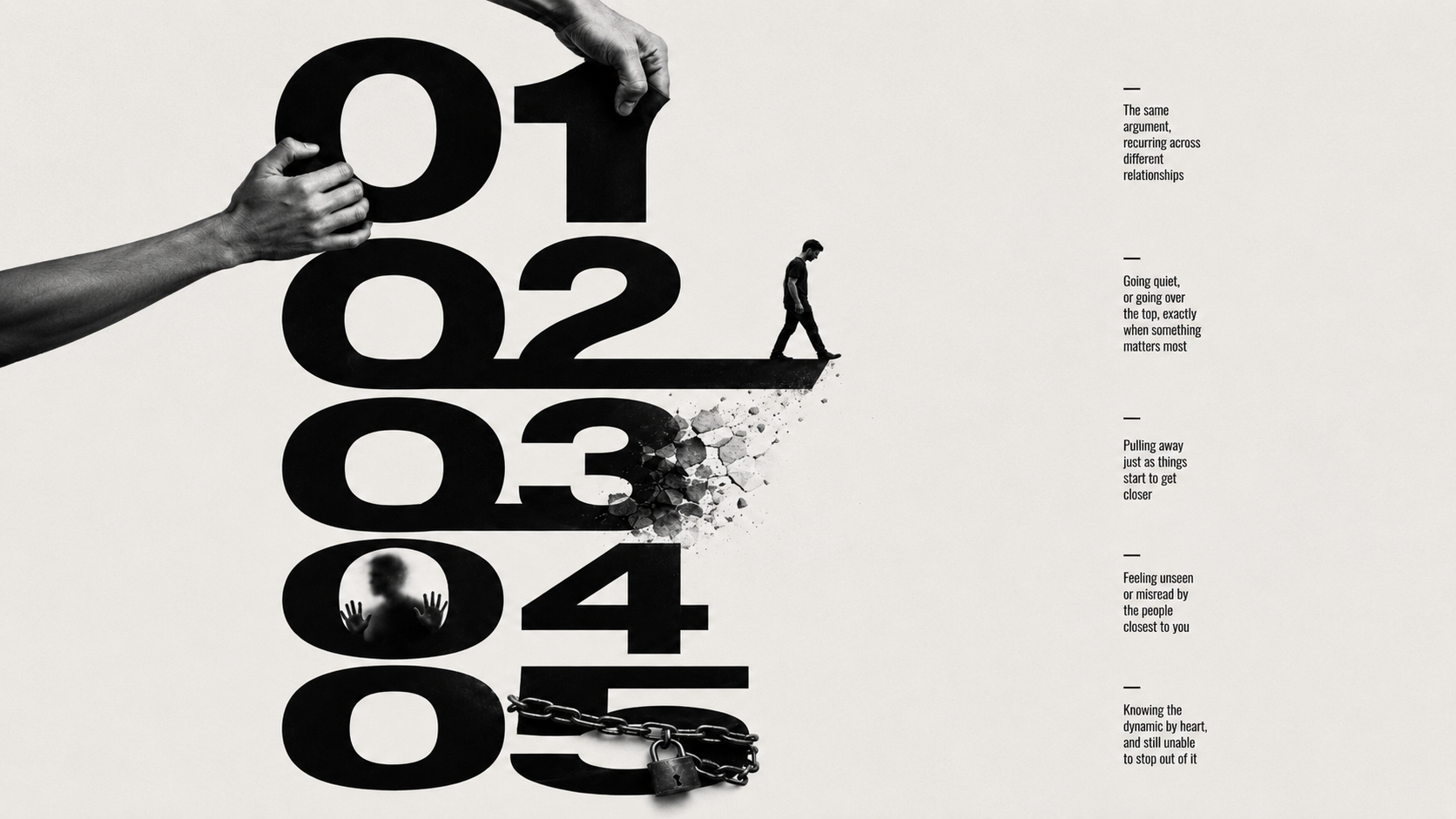
Five common experiences in relationships, numbered 01–05: the same argument, recurring across different relationships; going quiet, or going over the top, exactly when something matters most; pulling away just as things start to get closer; feeling unseen or misread by the people closest to you; knowing the dynamic by heart, and still unable to step out of it.

Few people arrive with all of these. Most recognise one or two — and find the others underneath as the work goes on.
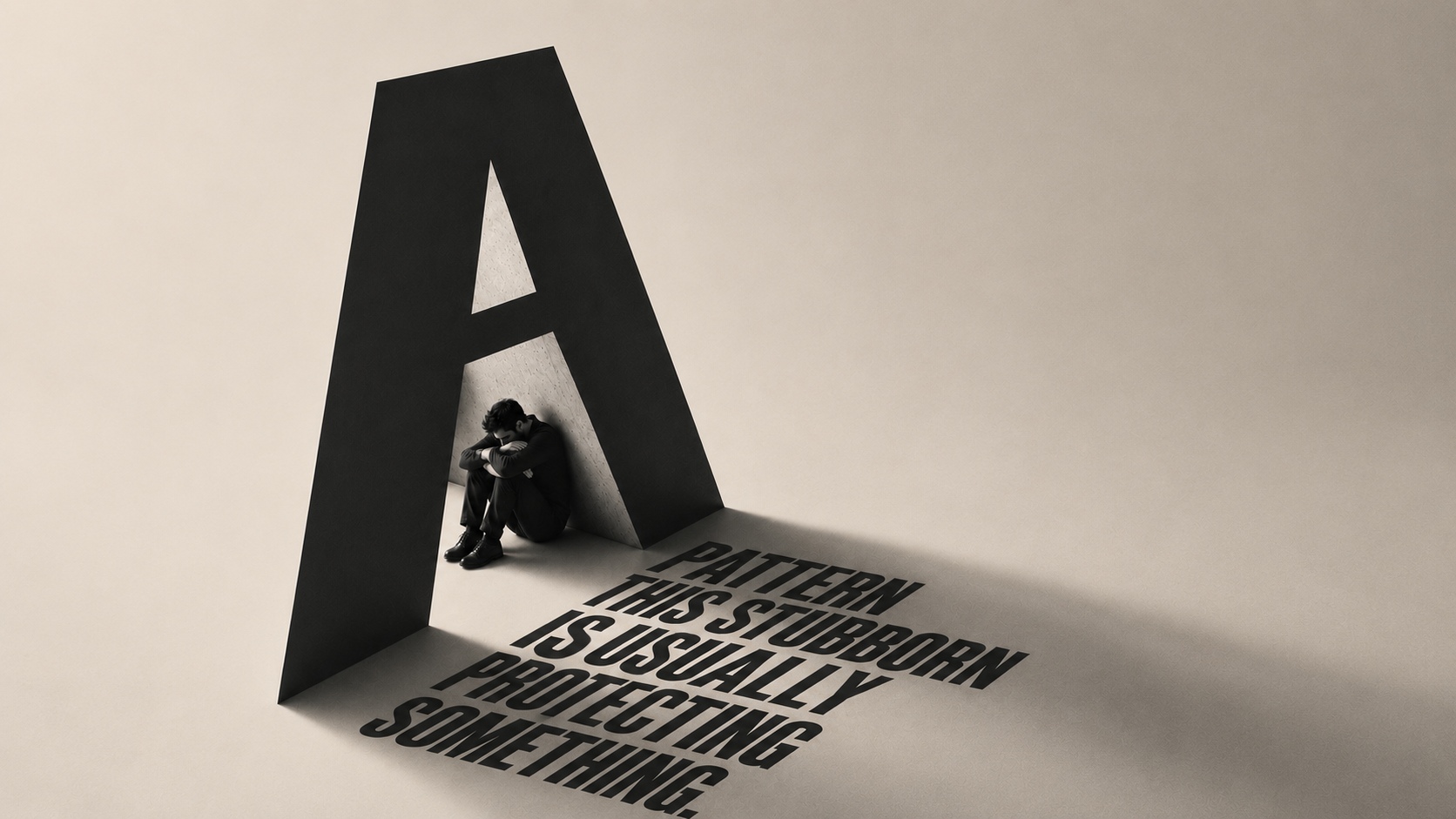
A figure sitting sheltered in the hollow of a giant letter ‘A’, its shadow spelling ‘A pattern this stubborn is usually protecting something.’
Where the pattern comes from

The pattern isn’t random, and it isn’t simply one person’s fault.

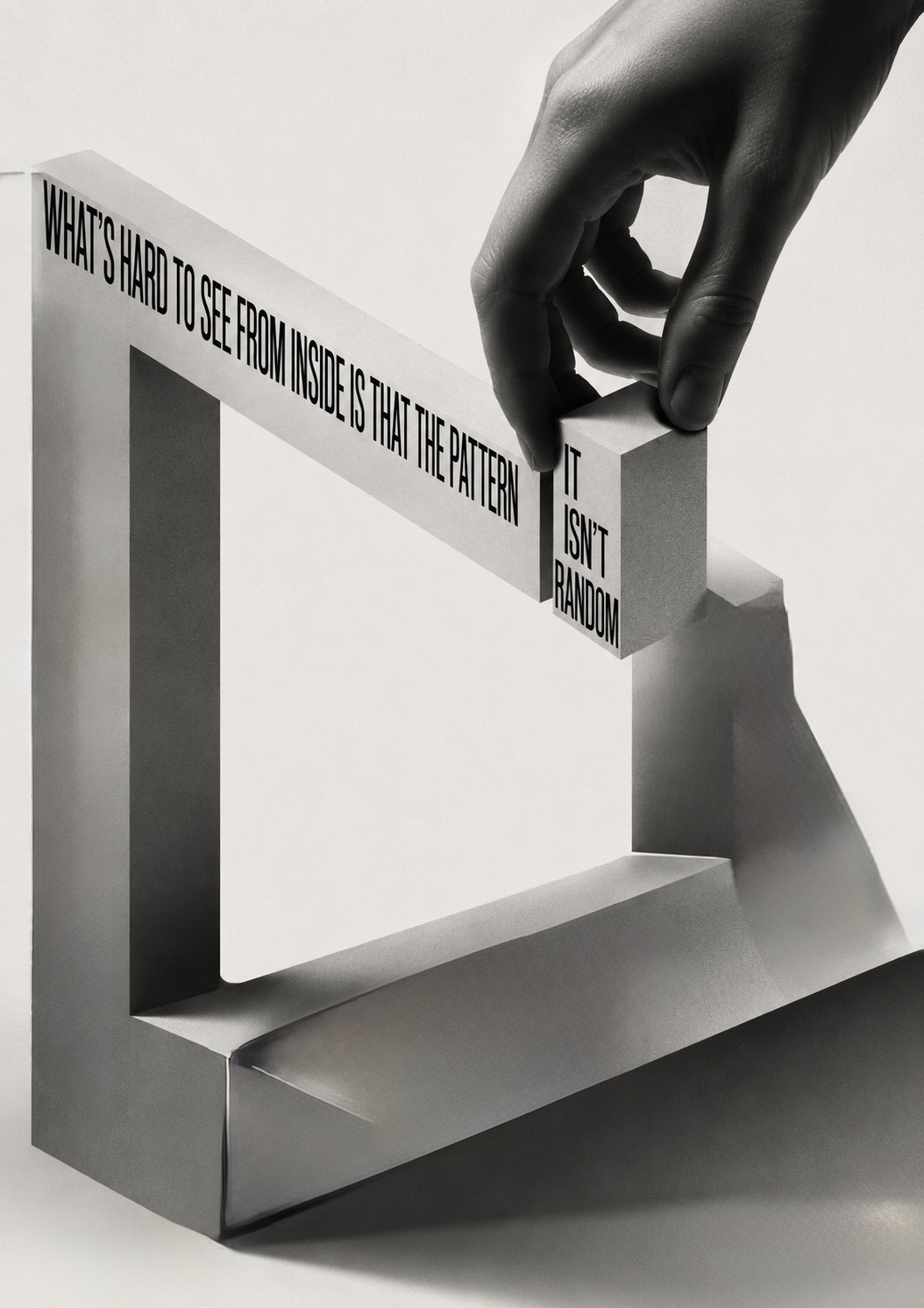
A hand lifting one block out of an impossible looping structure of type reading ‘what’s hard to see from inside is that the pattern — it isn’t random’ — a self-sustaining sequence with no clear beginning.

What’s hard to see from inside it is that the pattern isn’t random, and it isn’t simply one person’s fault. It’s something the two of you do together — a sequence each of you completes without meaning to, a move that reliably produces the countermove, until the whole thing runs on its own and neither of you can find where it started.

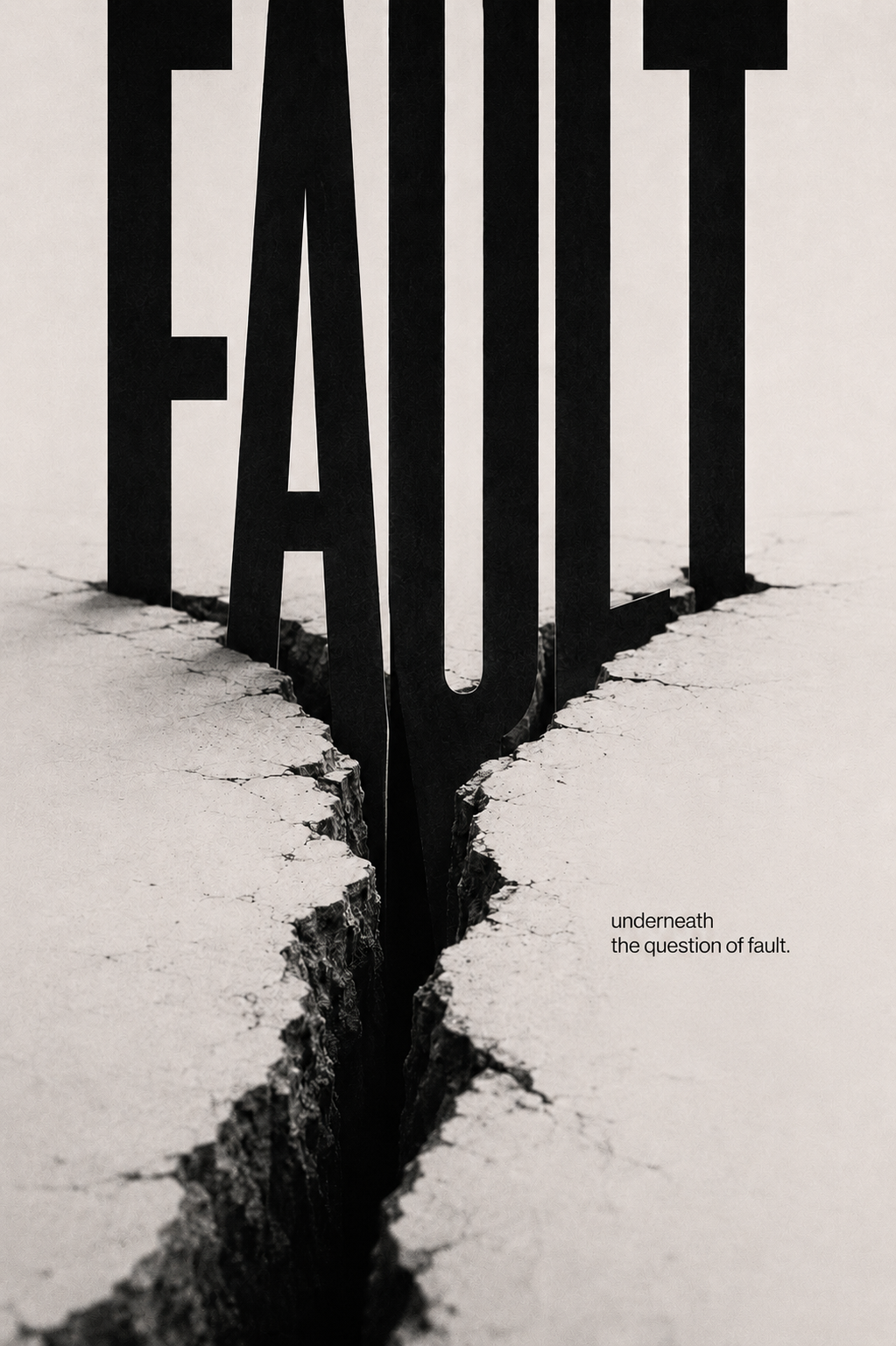
Underneath the question of fault.

The giant word ‘FAULT’ standing in a crack splitting dry ground, beside the line ‘underneath the question of fault.’

It lives in the space between you, in what gets enacted rather than said. What looks like a row about the dishes, or the silence, or the way one of you withdraws, is usually carrying something older — a fear about what closeness costs, a learned certainty about how people leave, a way of protecting yourself that made sense long before this relationship. Which is why advice so rarely reaches it: you can know exactly what to do differently and do the same thing anyway, because the pattern runs beneath knowing, in the part that reacts before thought arrives.

How therapy helps

The work goes the other way.

A hand lifting one letter-block out of a toppling stack that spells RELATIONSHIP — slowing the pattern down enough to see what each move is protecting.

The work here isn’t another method for communicating better, or a set of moves to take back into the relationship. It goes the other way — not assigning fault or handing out scripts, but slowing the pattern down enough to see what each move is actually protecting, and making it safe enough that the protection isn’t always necessary.

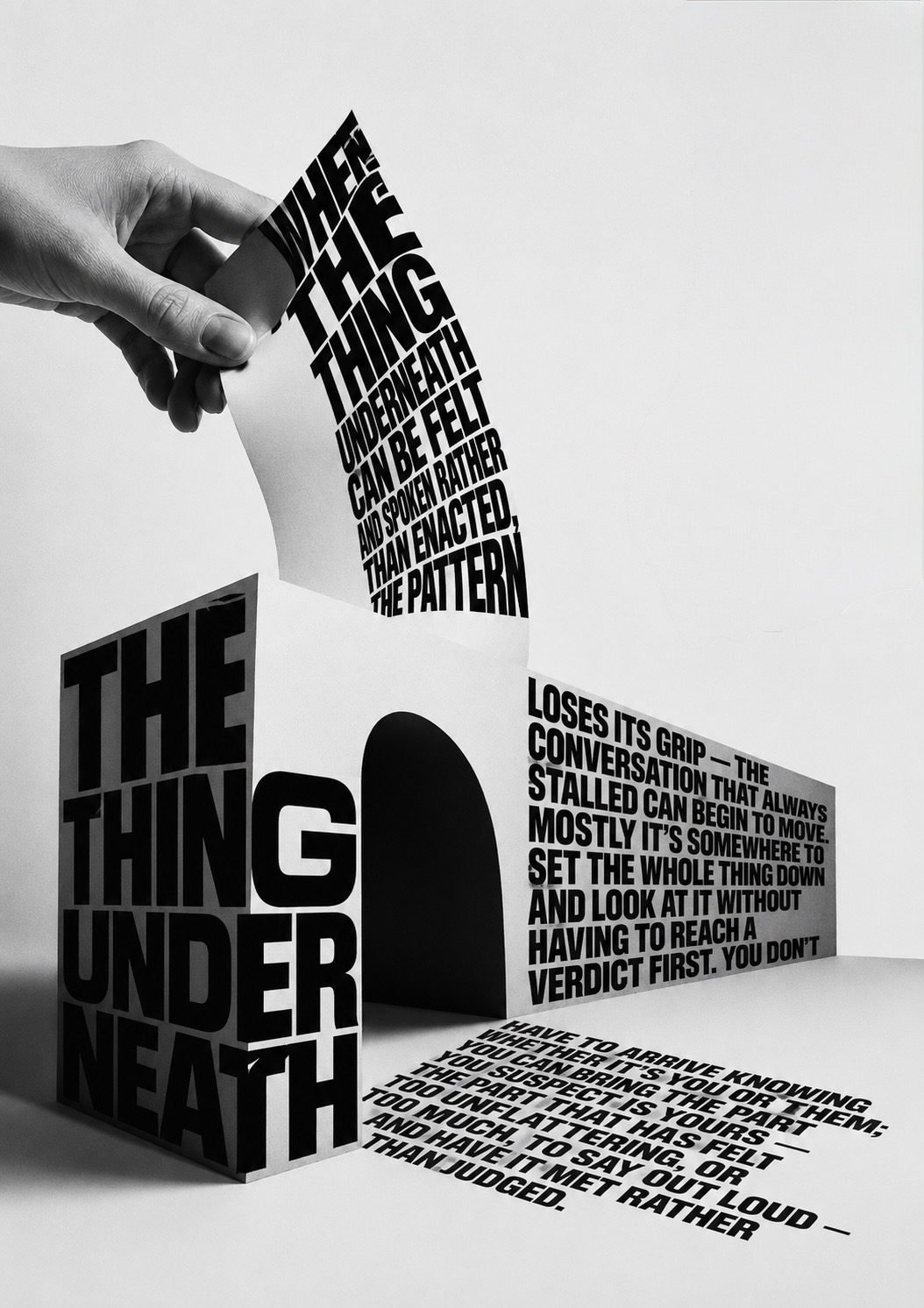
When the thing underneath can be felt and spoken rather than enacted, the pattern loses its grip.

A hand peeling up a curling ribbon of type reading ‘when the thing underneath can be felt and spoken rather than enacted, the pattern’ from a monumental block spelling ‘the thing underneath’, its continuation running across the floor.

When the thing underneath can be felt and spoken rather than enacted, the pattern loses its grip — the conversation that always stalled can begin to move. Mostly it’s somewhere to set the whole thing down and look at it without having to reach a verdict first. You don’t have to arrive knowing whether it’s you or them; you can bring the part you suspect is yours — the part that has felt too unflattering, or too much, to say out loud — and have it met rather than judged.

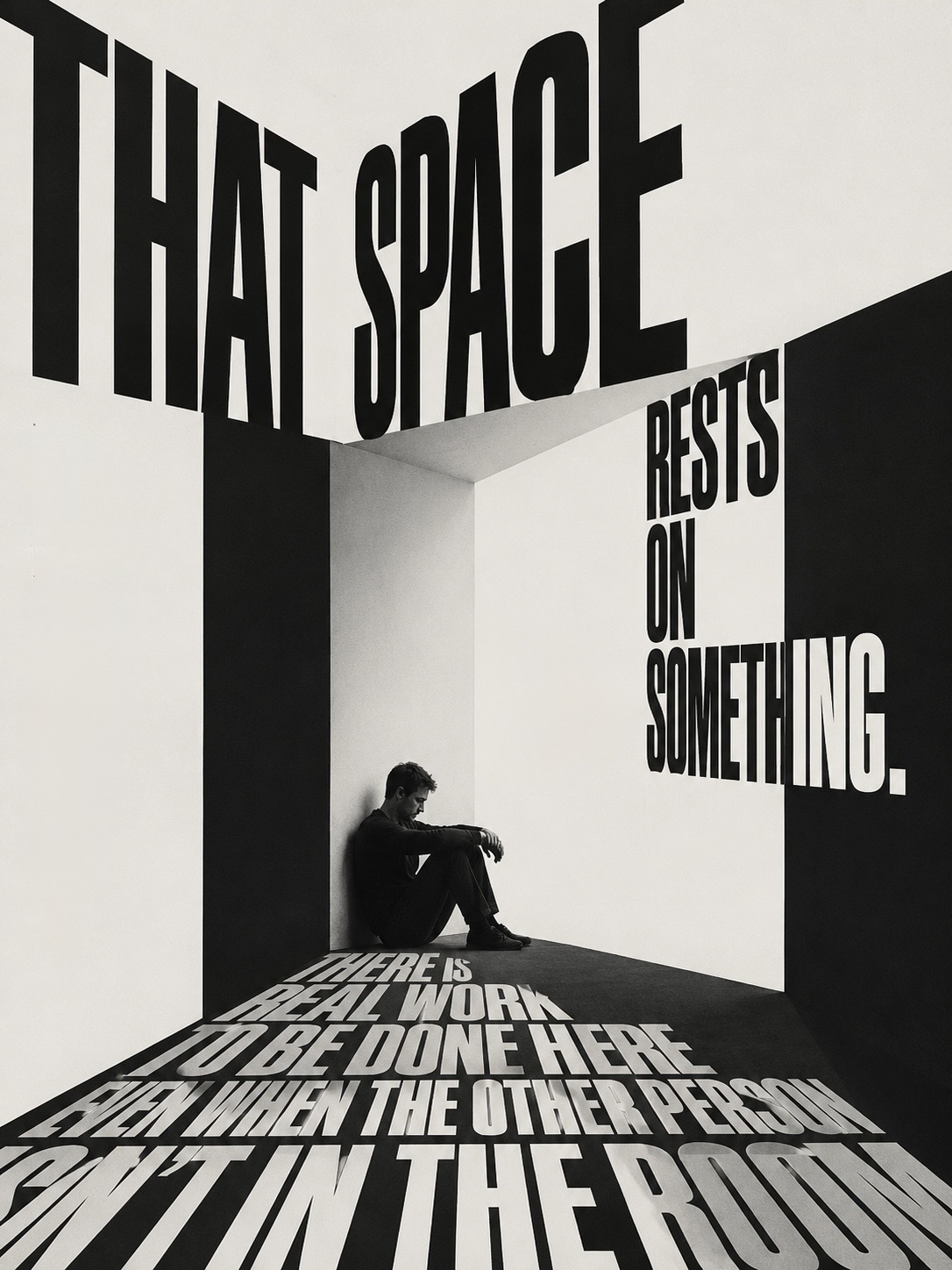
That space rests on something.

A lone figure sits against the wall of a monumental room built from the words ‘that space rests on something’, with ‘there is real work to be done here even when the other person isn’t in the room’ running across the floor.

That space rests on something. More than twenty years of this work, much of it in residential mental health and addiction settings, sitting with people through the parts of themselves they were most afraid of. The room has held a great deal; it can hold what you bring to it. And because the pattern runs through you as much as between you, there is real work to be done here even when the other person isn’t in the room.

If this feels familiar

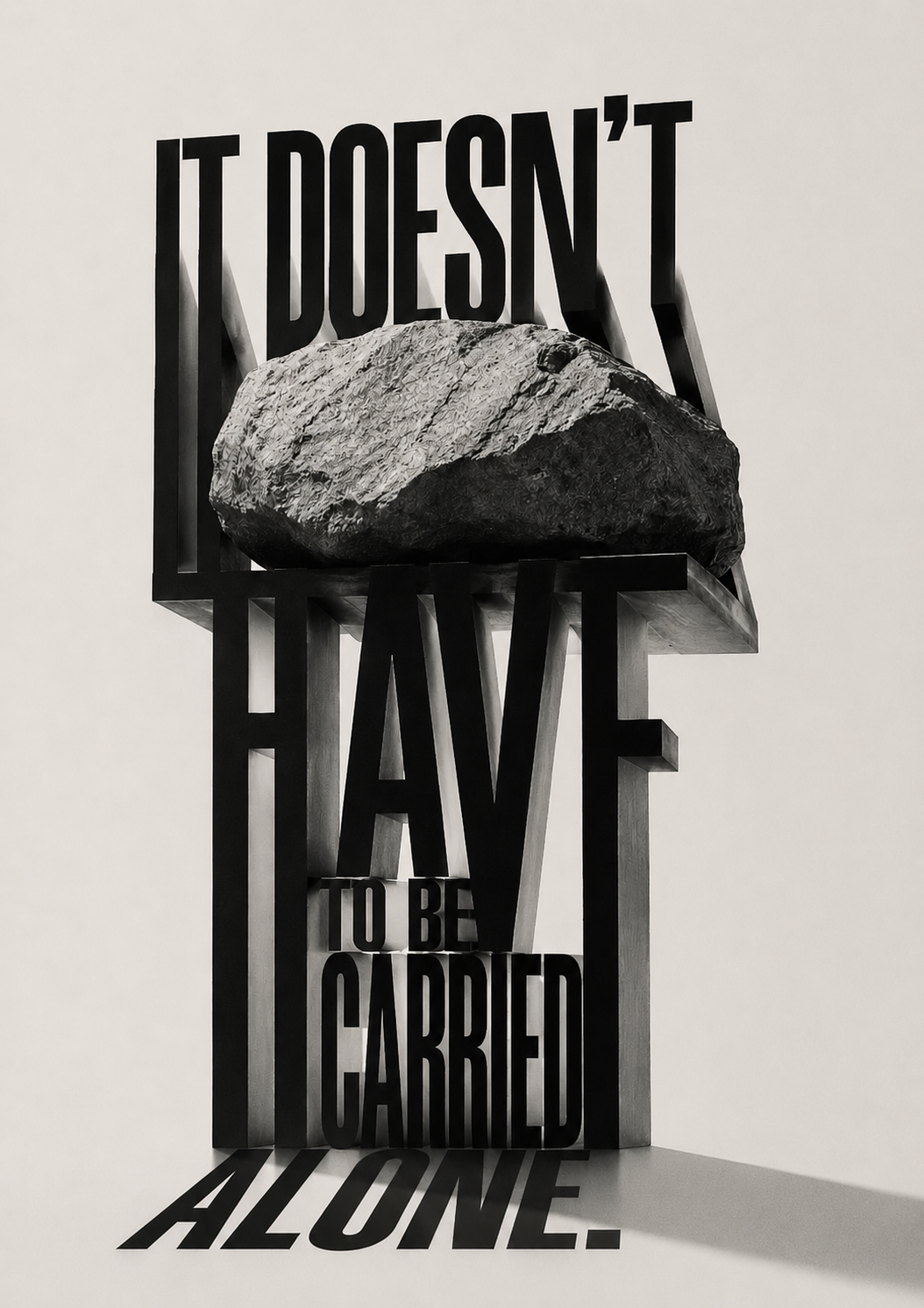
It doesn’t have to be carried alone.

Patterns this old rarely yield to trying harder inside them — you’ve likely proved that already. What tends to help is somewhere to step outside the pattern and look at it honestly, without first having to decide whose fault it is or whether it can be saved. And a great deal can shift even when only one person changes how they meet it — the sequence needs both parts to keep running. That’s a place to start, whatever you choose from there.

117 Harley Street, London W1G 6AT
Norwich NR2 · Online via Microsoft Teams
A heavy rock resting on a shelf built from giant 3D letters spelling ‘It doesn’t have to be carried alone.’