The word ‘Yes’ rendered as a wall a reaching hand is opening like a door.
How I can help

People-pleasing — the yes is out of your mouth before you've checked whether you mean it.

Area 04 · People-Pleasing

The yes is out of your mouth before you’ve checked whether you mean it.

You read a room before you read yourself. By the time you notice what it cost, you’ve already agreed to it.

What people-pleasing can feel like

From the outside it looks generous. From the inside it’s closer to vigilance.

A hand opening the monumental word ‘GENEROUS’ like a door, revealing a dark hollow space behind it — generosity with something concealed underneath.

From the outside it looks generous — attentive, accommodating, reliably willing — and it’s often mistaken for kindness, including by the person doing it. From the inside it’s closer to vigilance: a constant reading of what others need, what will keep them comfortable, so fast and so early that you reach for the room’s mood before you’ve noticed your own.

The cost is that you go quietly missing from your own life.

A person rests their head on their arms beneath the monumental words ‘THE COST’, its long shadow-letters reading ‘is that you go quietly missing from your own life’ — decisions made by reference to everyone else.

The cost is that you go quietly missing from your own life. Decisions get made by reference to everyone else; your own preferences become hard to locate, because for a long time it was safer not to have them. Underneath the accommodation there’s a tiredness that’s hard to point at, and sometimes a resentment that feels shameful — because you can’t quite see what you’d be allowed to want instead.

Area 04 · People-Pleasing

Common experiences

Seven common experiences of people-pleasing, numbered 01–07: saying yes before working out whether you want to; knowing how everyone in the room is feeling, all the time; a flash of resentment you then feel guilty for having; finding it hard to say what you’d actually prefer; apologising reflexively, smoothing, managing the mood; feeling responsible for how other people feel; a sense that being liked depends on being useful.

Few people arrive recognising all of these. Most know one or two, and find the rest underneath as the work goes on.


Being good at reading other people can quietly cost you the ability to read yourself.
Where people-pleasing often comes from

‘Put yourself first’ is true, and it doesn’t help.

A figure tips their head back as the monumental word ‘YOU’ presses down over their face while ‘ME’ lies fallen at their feet, beside the small line ‘put yourself first’ — the self displaced by everyone else.

Most people who come about this have already had the advice. Put yourself first. You matter too. It’s true, and it doesn’t help — and it’s worth being honest about why. This isn’t a character flaw, and it isn’t mere insecurity. The reading of others is a real and finely developed skill, learned early — often by a child who had to attune to a parent rather than be attuned to.

The gift was genuine; it was simply turned outward.

A lone figure sits inside a vast room built from the monumental words ‘TO THE GIFT — TURNED, READING THE ROOM’, with ‘read yourself’ cast small across the floor — a gift turned outward at the cost of reading oneself.

Where it wasn’t safe to bring your own spontaneous reactions, you became expert at meeting the other person’s instead. The gift was genuine; it was simply turned outward, under conditions that couldn’t receive it turned in. Reading the room became the thing you were best at — and the cost was that you stopped getting to the part where you read yourself.

Prioritising yourself triggers the very alarm the pleasing was built to avoid.

A person shields their face with one hand beneath the monumental, cracking words ‘PUT YOURSELF FIRST’ — the advice that triggers the very alarm the pleasing was built to avoid.

Which is why ‘put yourself first’ lands so uselessly. The difficulty isn’t that you haven’t heard it; it’s that prioritising yourself triggers the very alarm the pleasing was built to avoid — the fear of disapproval, of being too much, of a withdrawal that once felt dangerous. Until that’s met, the old pattern reasserts itself the moment someone looks displeased.

How therapy helps

This is not training in saying no.

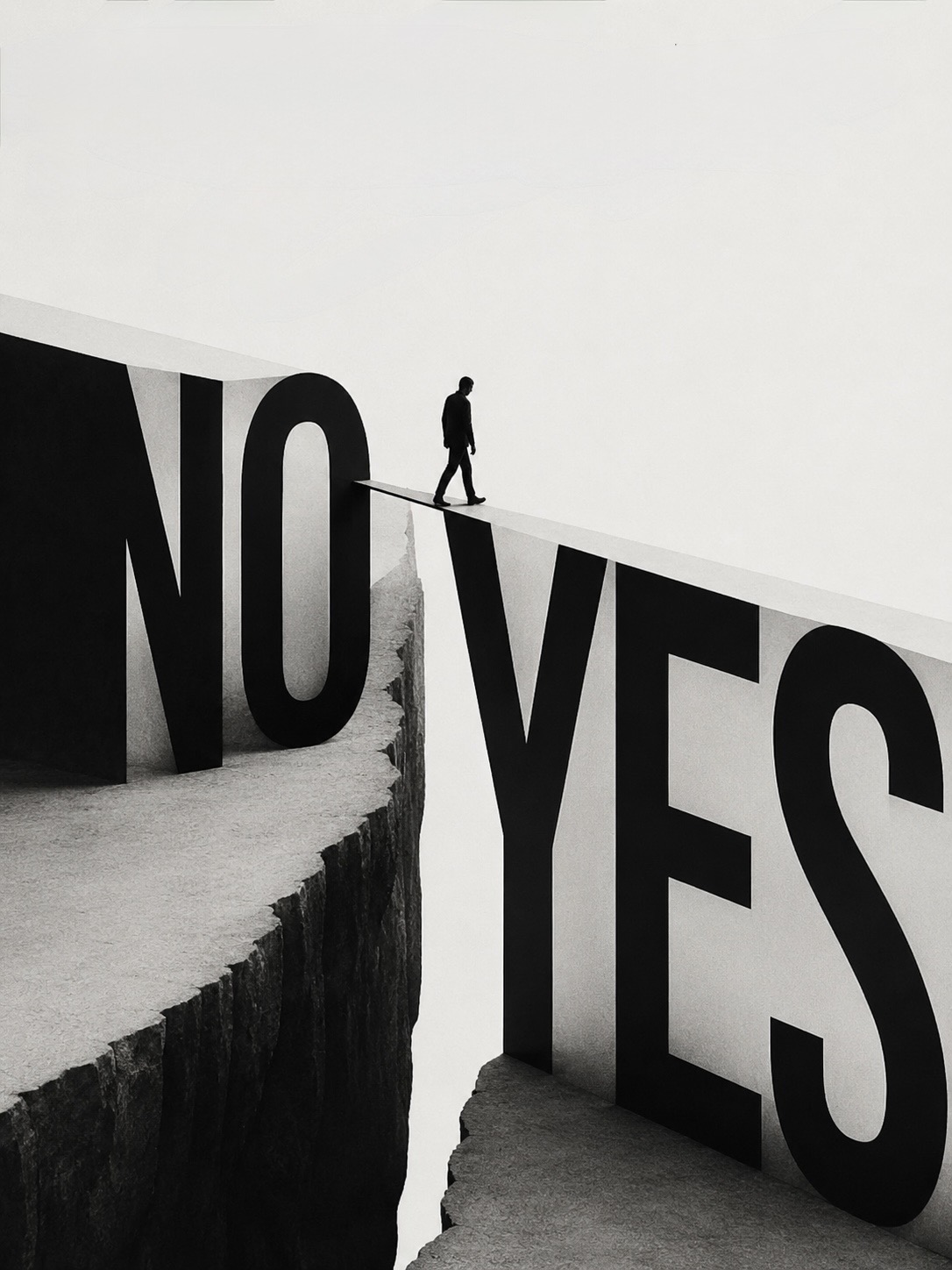
A lone figure crosses a narrow bridge of rock spanning the chasm between the monumental words ‘NO’ and ‘YES’ — the place where the yes is already moving, past the reach of saying no.

This is not training in saying no. You’ve likely tried that, and it doesn’t reach the place where the yes is already moving.

A relationship where nothing has to be performed.

A lone figure sits on a chair in a shaft of light within a room of monumental type reading ‘you don’t have TO PERFORM’, its shadow spelling ‘maintain’ across the floor — a space where nothing has to be managed.

It goes the other way — making it safe enough that the watching can relax and your own responses begin to surface. This is a space where nothing has to be managed: you don’t have to track how I’m doing, smooth anything, or be the easy one. The reactions you learned to set aside were never the price of being close to people; they’re part of what you’d bring to being close to them — and that isn’t learned from instruction, but in a relationship where nothing has to be performed.

The room has held a great deal. It can hold what you bring to it.

An empty armchair glimpsed through a doorway in a monumental room of type reading ‘more than twenty years of this work — the room has held a great deal, it can hold what you bring to it’, with ‘the resentment, the wanting, the no you’ve never quite been able to reach’ across the floor.

More than twenty years of this work, much of it in residential mental health and addiction settings, sit behind that. The room has held a great deal. It can hold what you bring to it — including the parts that don’t look generous: the resentment, the wanting, the no you’ve never quite been able to reach.

If this feels familiar

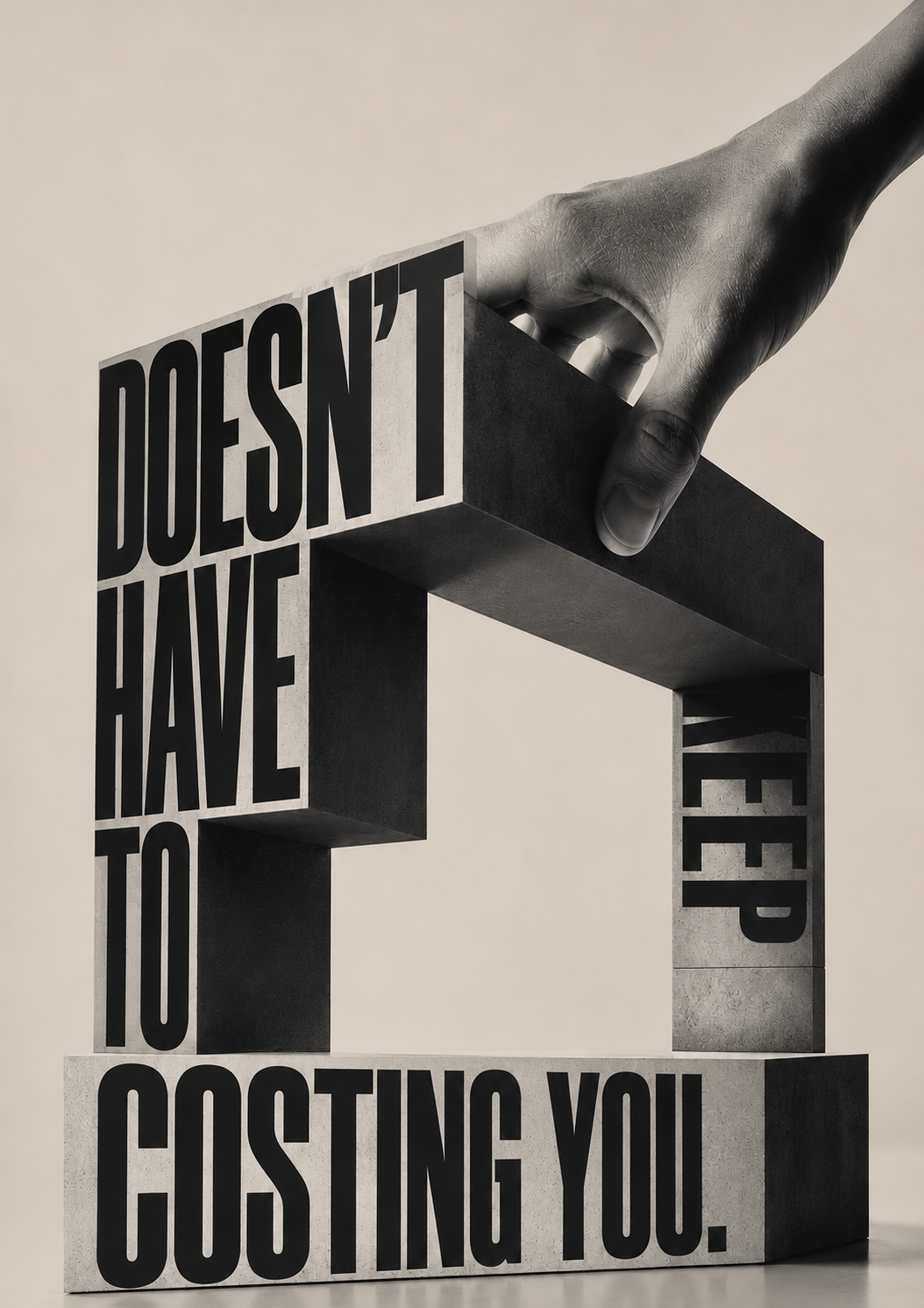
It doesn’t have to keep costing you.

A pattern this old and this automatic rarely changes by being told to. What tends to make a difference is somewhere your own signal is allowed to surface — somewhere you’re met without having to earn it by being easy. People who do this work don’t become uncaring; they become able to give from genuine choice rather than compulsion, which is, in the end, a truer kind of generosity.

117 Harley Street, London W1G 6AT
Norwich NR2 · Online via Microsoft Teams
It doesn’t have to keep costing you.