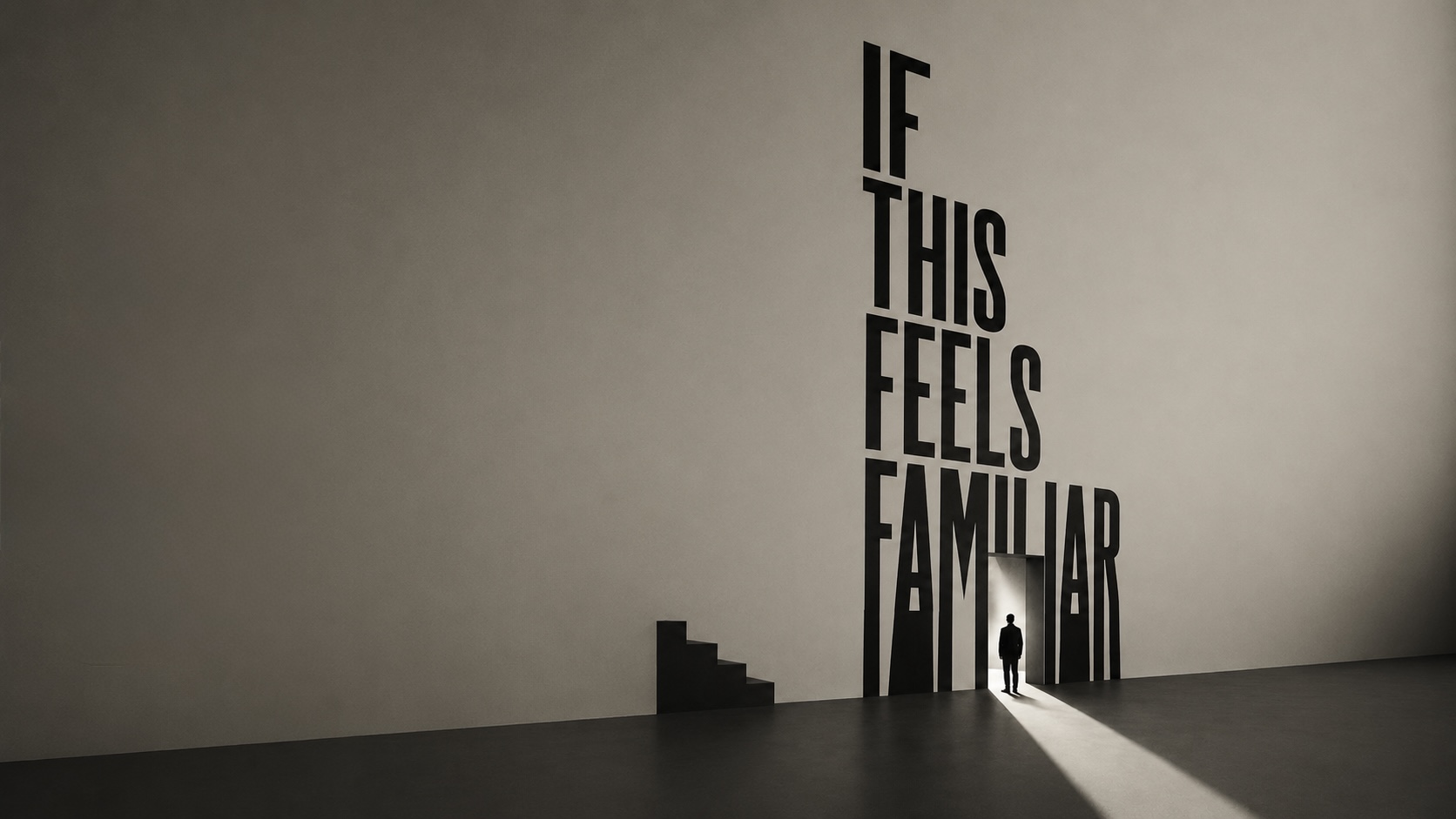
The change has happened — you’re not sure who you are now.
How I can help

Life transitions — the change has happened, and you’re not sure who you are now.

Area 06 · Life transitions

The change has happened. You’re not sure who you are now.

The practical part you saw coming. What blindsided you is the disorientation that doesn’t seem to match the situation — especially when the change is one you chose, or one others would envy. There can be somewhere to stand while the ground settles.

What it can feel like

The situation moved. You’re still somewhere behind it.
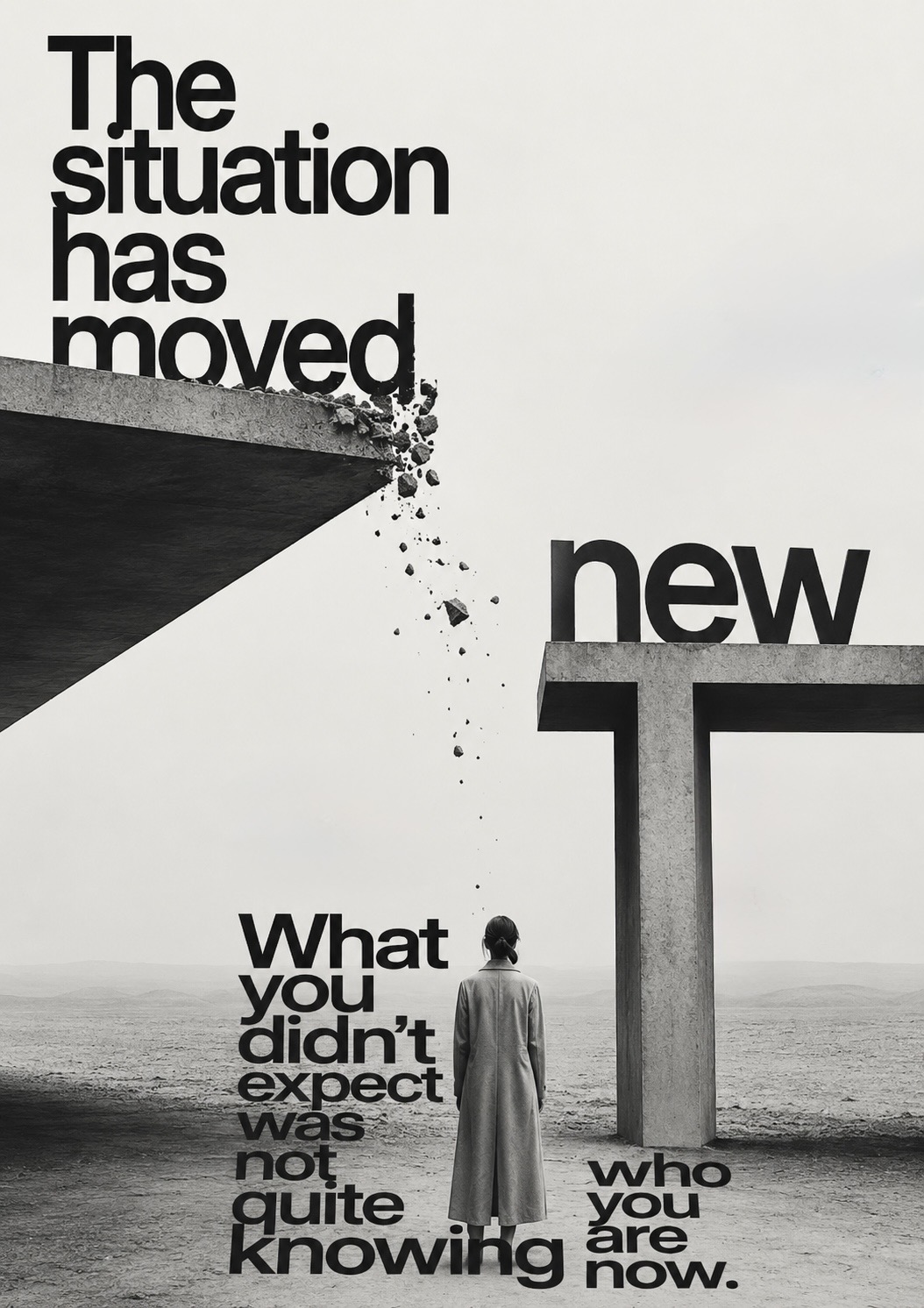
A woman stands in a barren landscape between a crumbling concrete slab reading ‘The situation has moved’ and a new intact structure marked ‘new’, with ‘what you didn’t expect was not quite knowing who you are now’ across the ground.

The situation has moved, and the self is still somewhere behind it, looking for ground that has shifted. The new parent, the person who has left a career, the one whose long chapter has simply ended — you expected the practical disruption, the logistics, the new routine. What you didn’t expect was not quite knowing who you are now.

It comes with the chosen changes as much as the unchosen ones.
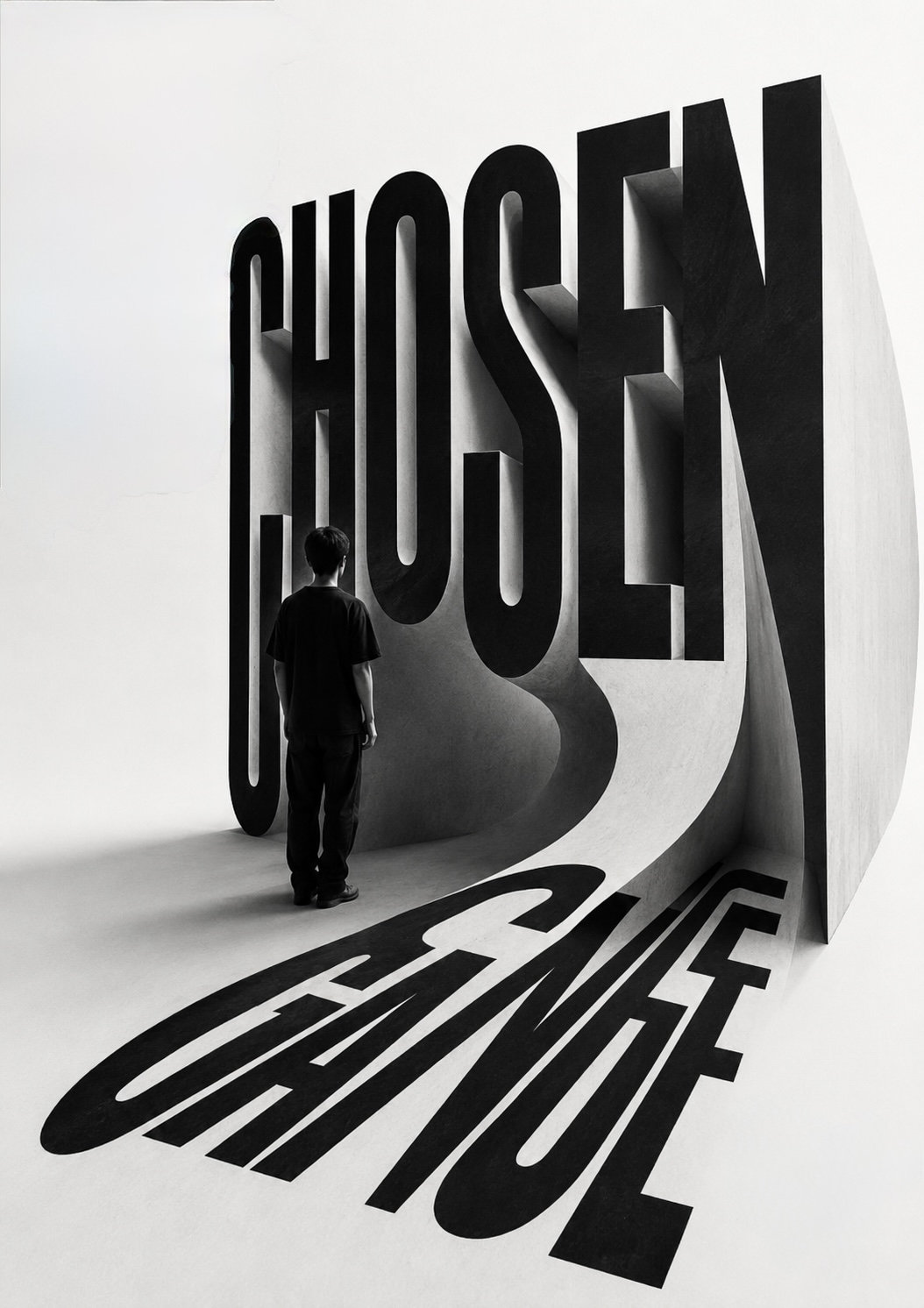
A figure stands before the monumental word ‘CHOSEN’, its long shadow spelling ‘change’ across the floor — the disorientation that arrives even with a change you wanted.

It comes with the chosen changes as much as the unchosen ones. And it is easy to judge yourself for struggling — especially when the change is one others would envy, or one you wanted. The good thing arrived; the disorientation came anyway, and the two don’t cancel out.

A life that is yours and somehow not yet yours.
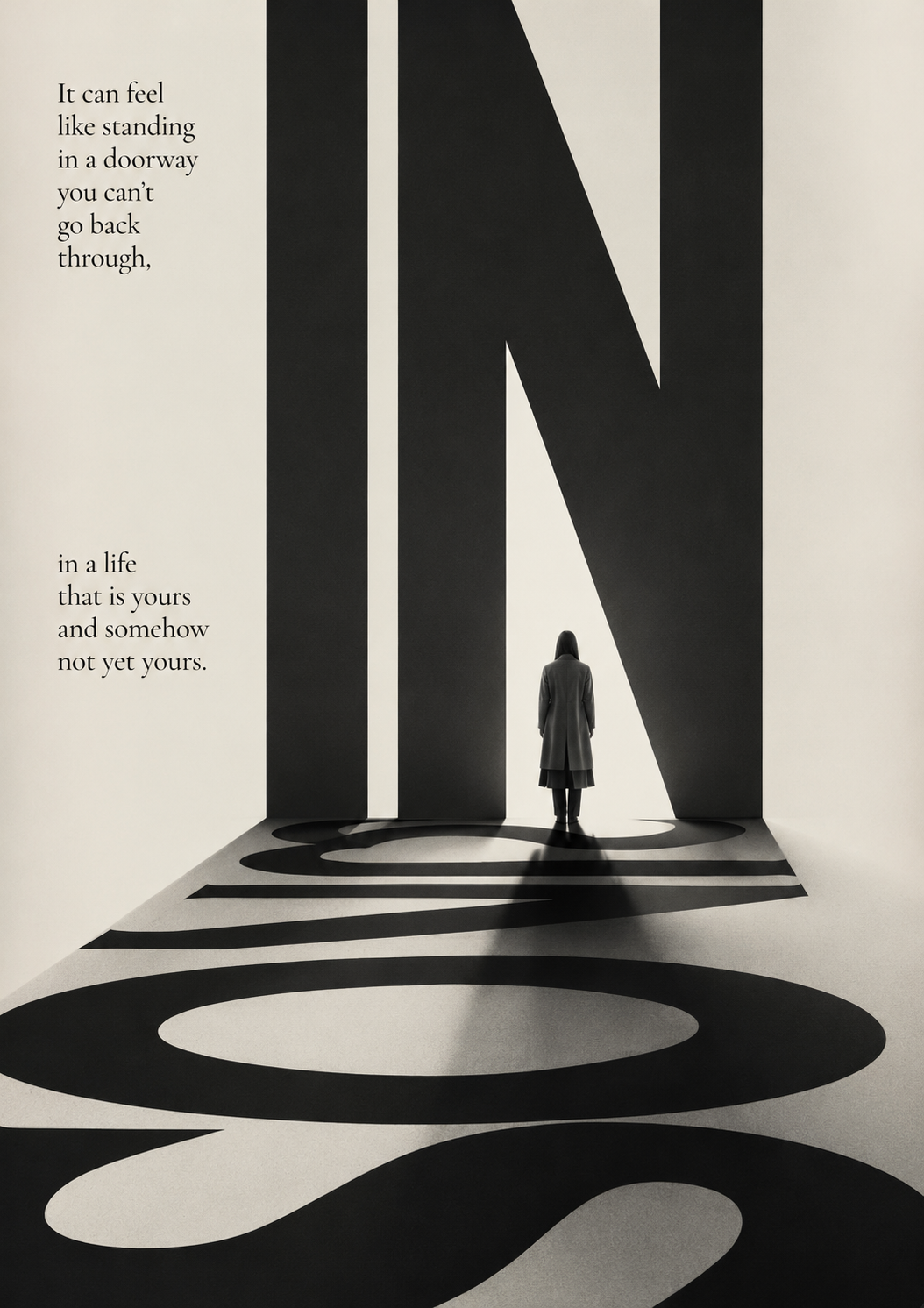
A lone figure stands in a doorway formed by a monumental letter ‘N’, its shadow spelling ‘yours’ in looping script across the floor — a life that is yours and somehow not yet yours.

It can feel like standing in a doorway you can’t go back through, in a life that is yours and somehow not yet yours.
Area 06 · Life transitions

Common experiences

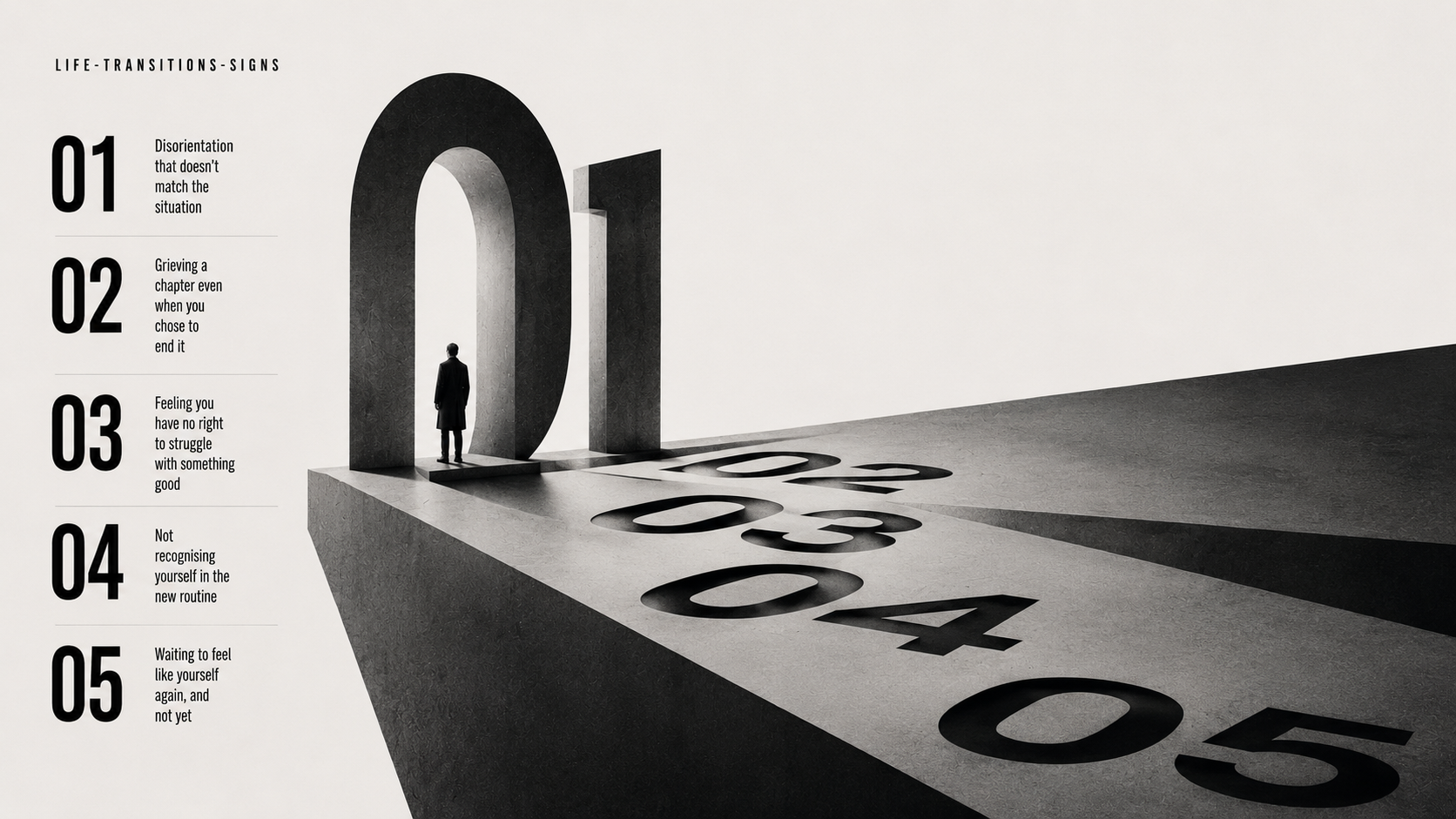
Five common experiences of a life transition: 01 disorientation that doesn’t match the situation; 02 grieving a chapter even when you chose to end it; 03 feeling you have no right to struggle with something good; 04 not recognising yourself in the new routine; 05 waiting to feel like yourself again, and not yet.

Few people arrive with all of these. Most recognise one or two — and find the others underneath as the work goes on.
Even a change you chose asks you to lose a self.
Where it comes from

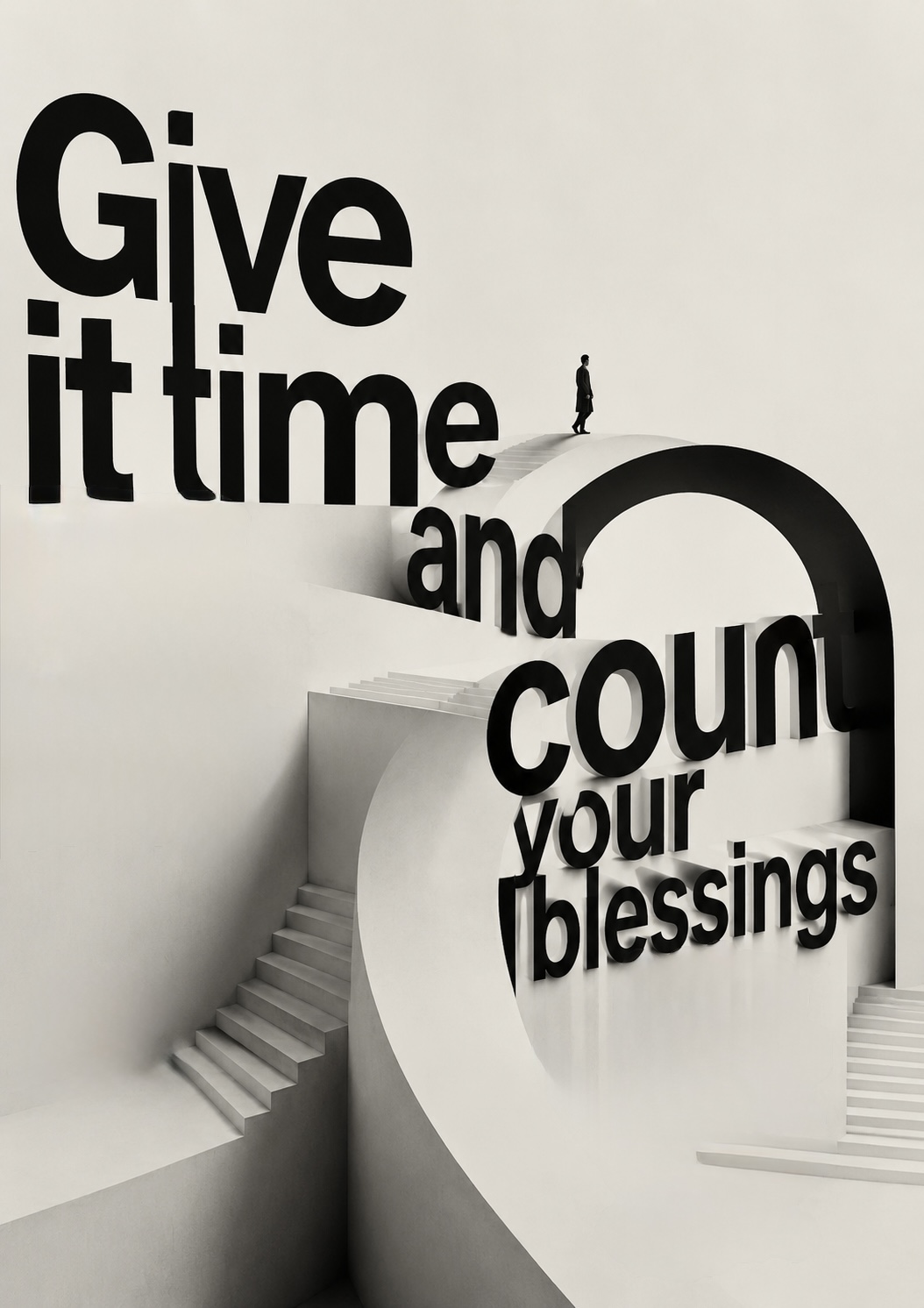
‘Give it time’ and ‘count your blessings’ both miss it.

A tiny figure walks across a vast white architecture of curving stairs and ramps formed by the monumental words ‘Give it time and count your blessings’ — advice that misses the real trouble.

‘Give it time’ and ‘count your blessings’ both miss it, because the trouble isn’t ingratitude and it isn’t the calendar. A transition is not only a change of circumstance. It’s a change in who you take yourself to be — and the self runs behind the situation, sometimes by a long way.

Whatever ended took a version of you with it.

A lone figure climbs a spiral stair toward a doorway of light within a monumental composition of serif letters — climbing out of the version of yourself that whatever ended took with it.

Whatever ended took a version of you with it — a way of organising the days, a sense of your place, a self that knew what it was for. That’s a real loss, even when what replaced it is something you wanted. It has its own pace, and that pace is rarely the one the situation is keeping. The disorientation isn’t a sign you’re failing the change; it’s the self catching up to a life that moved first.

How therapy helps

Somewhere to set it down.

Monumental letters spelling NORMAL, cracked apart, with a lone figure standing in the gap — the work here isn’t about getting you back to normal; normal is often the thing that has changed.

The work here isn’t about getting you back to normal — normal is often the thing that has changed. It goes the other way: making room for what is actually happening, including the loss inside the gain, rather than hurrying you across the threshold — which, in any case, tends only to prolong the in-between.

Mostly it’s a steady place to stand while the ground settles.

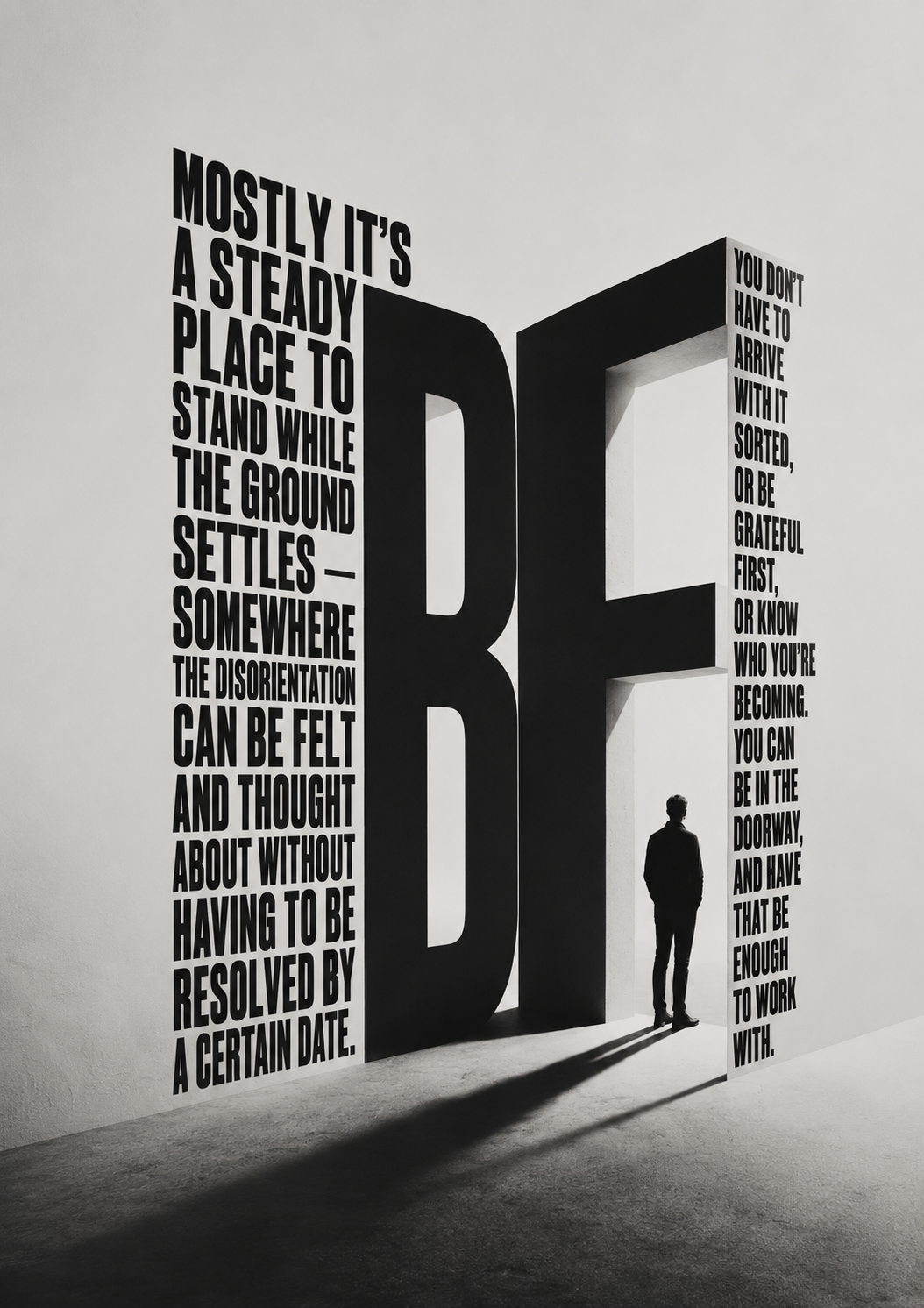
A giant letterform BE opens like a doorway, a lone figure standing inside it — mostly it’s a steady place to stand while the ground settles; you can be in the doorway, and have that be enough to work with.

Mostly it’s a steady place to stand while the ground settles — somewhere the disorientation can be felt and thought about without having to be resolved by a certain date. You don’t have to arrive with it sorted, or be grateful first, or know who you’re becoming. You can be in the doorway, and have that be enough to work with.

That space rests on something.

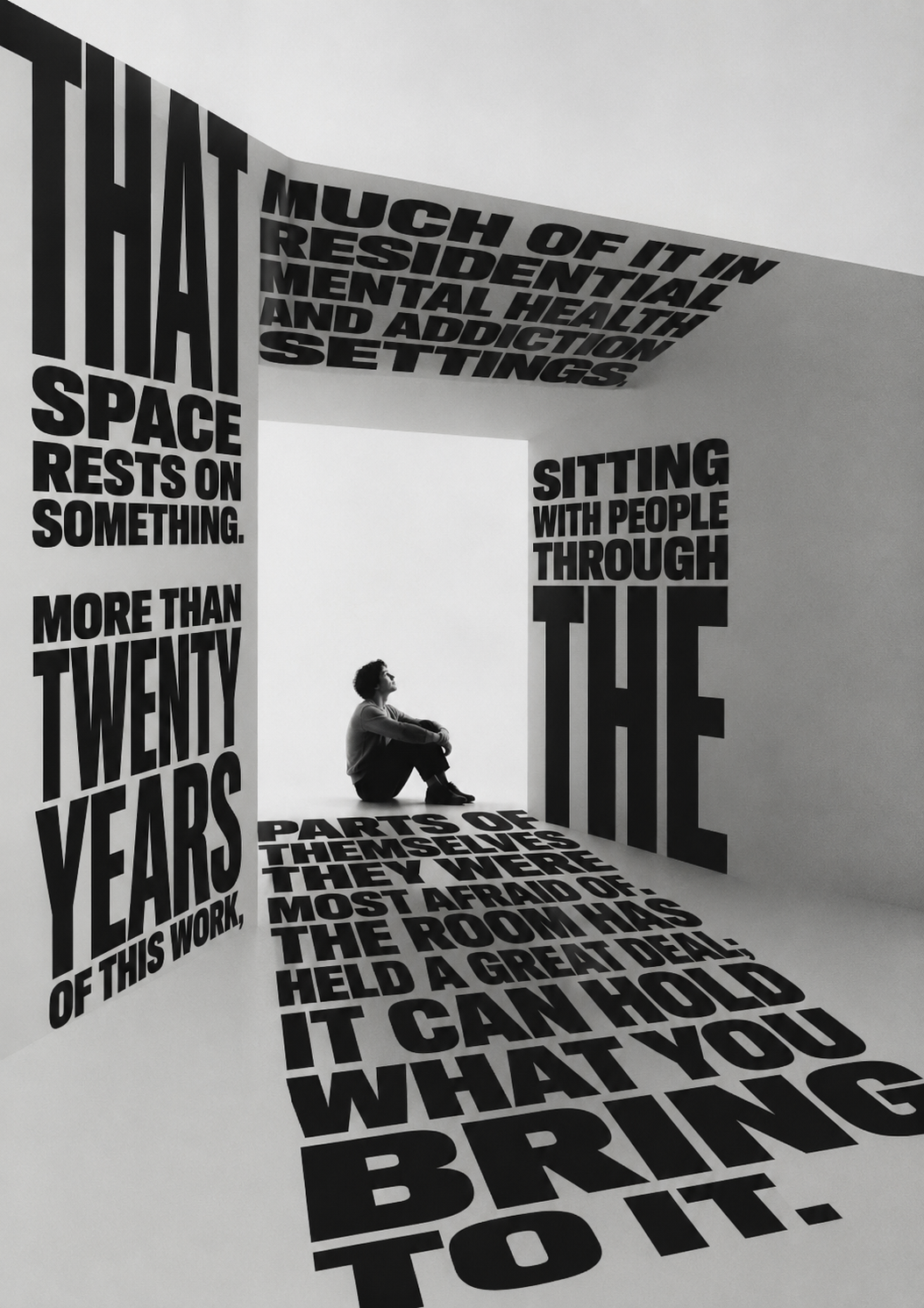
A room built from monumental words — that space rests on something: more than twenty years of this work — with a figure sitting quietly at its centre; the room has held a great deal, it can hold what you bring to it.

That space rests on something. More than twenty years of this work, much of it in residential mental health and addiction settings, sitting with people through the parts of themselves they were most afraid of. The room has held a great deal; it can hold what you bring to it.

If this feels familiar.
If this feels familiar

It doesn’t have to be carried alone.

Disorientation like this rarely lifts to a schedule — and being told you’ll find your footing is its own kind of pressure. What tends to help is somewhere to stand while the ground settles, at its own pace, with the doorway no longer somewhere you wait alone. That’s a place to begin, whatever it’s becoming.

117 Harley Street, London W1G 6AT
Norwich NR2 · Online via Microsoft Teams