Grief does not follow the shape it is supposed to.
How I can help

Grief does not follow the shape it is supposed to.

Area 08 · Bereavement & Loss

Grief does not follow the shape it is supposed to.

What it can feel like

There are no clean stages, no schedule.

Monumental letters spelling THERE ARE NO CLEAN STAGES rise beside a lone figure on rocks watching a wave roll in — there are no clean stages, no schedule.

There are no clean stages, no schedule, no point at which it is reliably finished. It arrives in waves with their own timing, recedes, returns without warning at the small things rather than the large ones. And it does not only follow recent loss. Sometimes grief surfaces years late — a loss that was never fully felt at the time, waiting, arriving when something finally makes it safe to land.

The world expects a recovery curve, and yours does not comply.
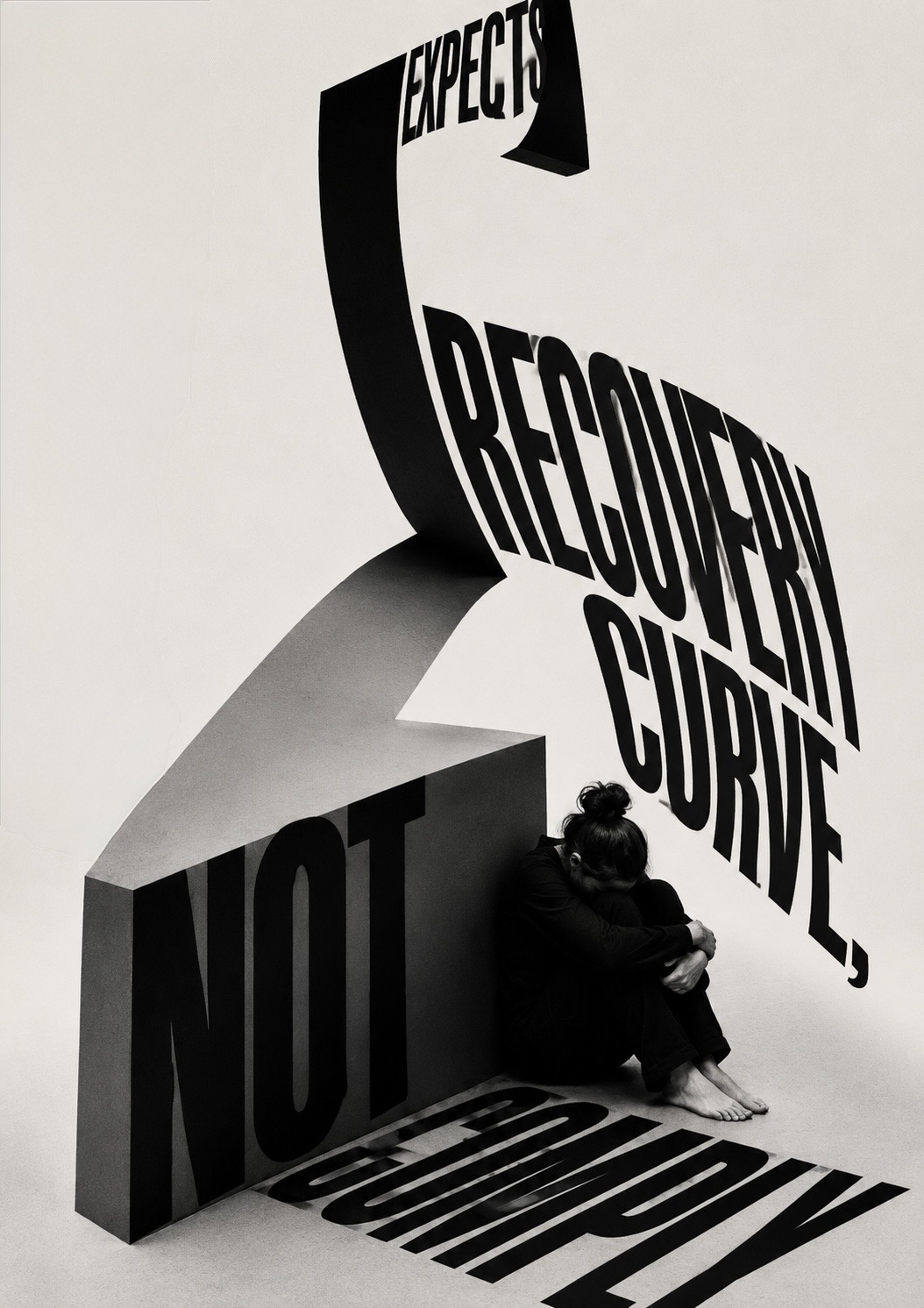
A monumental sculptural word RECOVERY CURVE arcs and collapses over the word NOT while a grieving figure sits curled at its base — the world expects a recovery curve, and yours does not comply.

This unpredictability is part of what makes grief lonely. The world expects a recovery curve, and yours does not comply. People mean well and want you past it. You may find yourself managing their discomfort, performing a degree of recovery you do not feel, carrying the loss more privately than you should have to.

Grief is the form love takes when what it was attached to is gone.
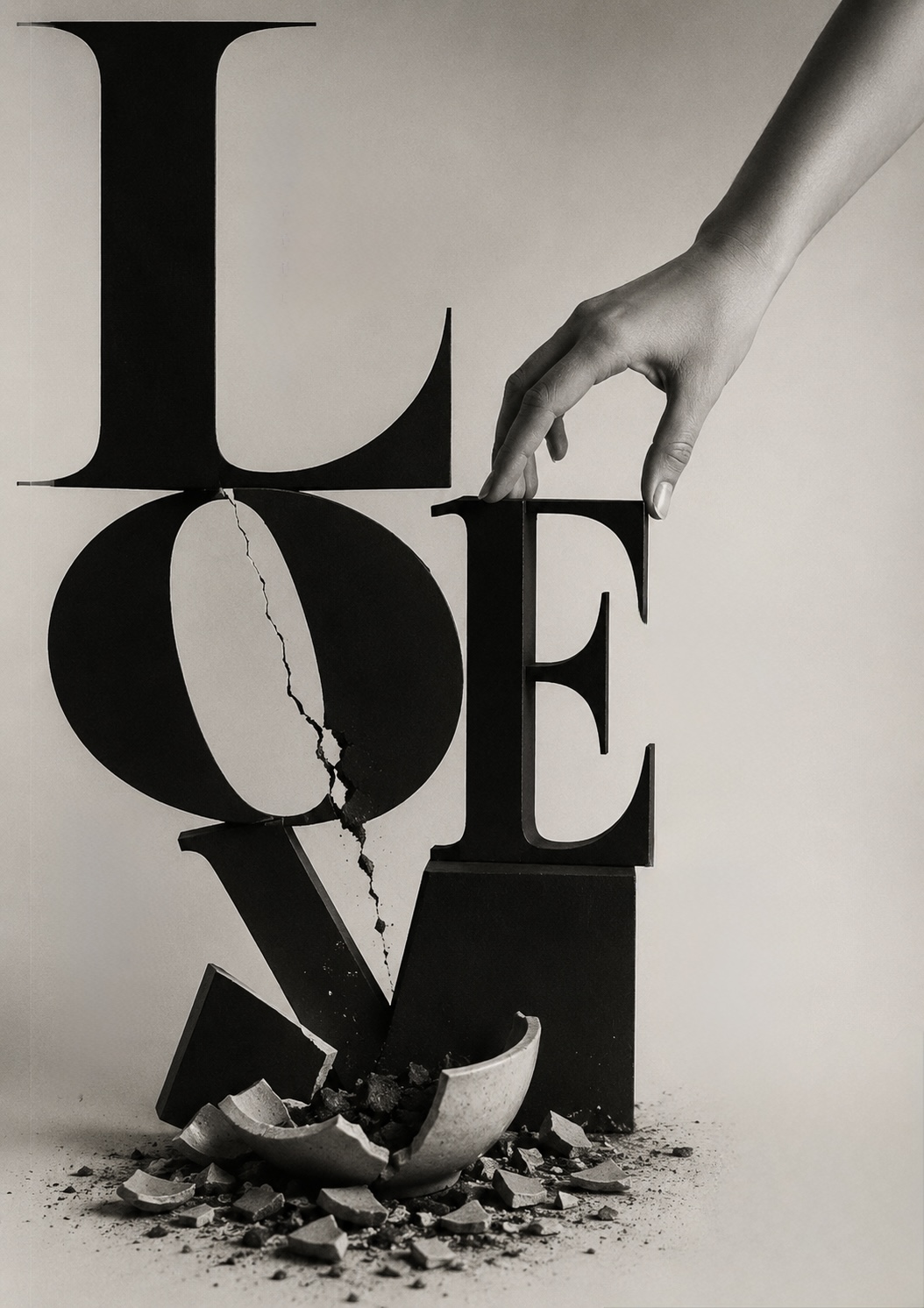
A hand lifts a letter from the monumental word LOVE as its base cracks and shatters into fragments on the ground — grief is the form love takes when what it was attached to is gone.

It is worth saying that grief is not a problem to be solved or a process to be completed on time. It is the form love takes when what it was attached to is gone. There is no correct pace, and the fact that it still moves you — months or years on, or for someone you thought you had already mourned — is not a sign that something has gone wrong. It is a sign of what the relationship meant.


Grief that arrives late

Grief that arrives late.

A grieving figure leans over the monumental word GRIEF, its final letter cracked and breaking away — grief that arrives late can be confusing and self-judging.

Grief that arrives late deserves particular mention, because it can be confusing and self-judging. A loss that could not be felt when it happened — because you were too young, too busy surviving, too unsupported to afford it — does not disappear. It waits.

It is simply being felt now, because now there is room.

A lone figure walks through a doorway formed by the monumental letters of the word ROOM — it is simply being felt now, because now there is room.

When it finally surfaces, often prompted by something seemingly unrelated, it can feel disproportionate or untimely. It is neither. It is simply being felt now, because now there is room.

Somewhere it can be felt

To accompany it — at its own pace.

A tiny figure stands before a monumental doorway formed by the word ACCOMPANY IT, its long shadow spelling AT ITS OWN PACE across the floor — the work is to accompany grief at its own pace.

The work is not to move you through grief faster or to help you "let go." It is to accompany it — to provide a place where the loss can be felt at its own pace, without being tidied or hurried, where you do not have to protect anyone else from it.

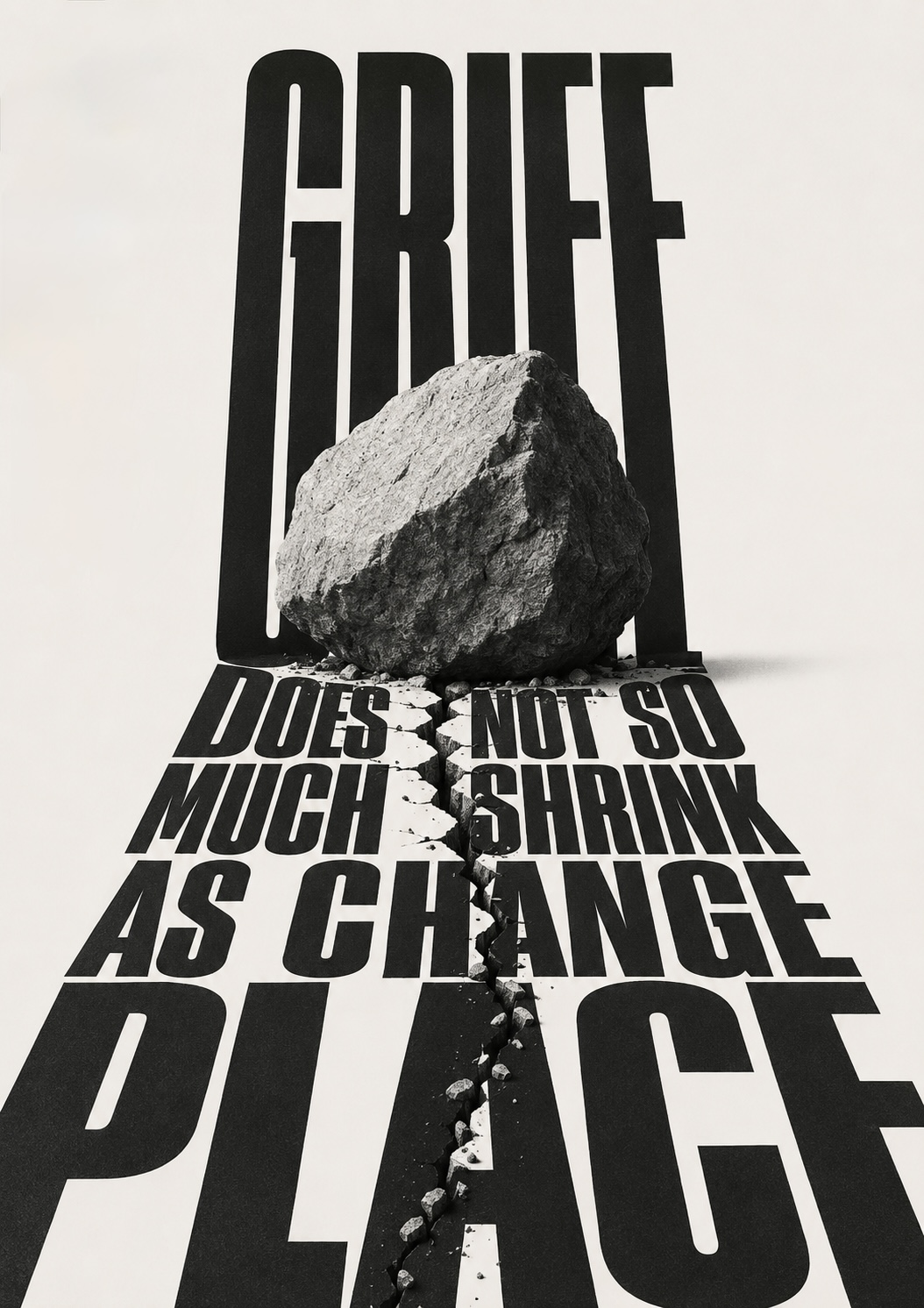
Grief does not so much shrink as change place.

A boulder rests on the monumental word GRIEF, cracking a path through the words DOES NOT SO MUCH SHRINK AS CHANGE PLACE — grief does not so much shrink as change place.

Grief that is allowed its time does not so much shrink as change place. The loss stays the size it is; what happens, slowly, is that a life grows up around it — wide enough that the loss is carried within it rather than being the whole of it.

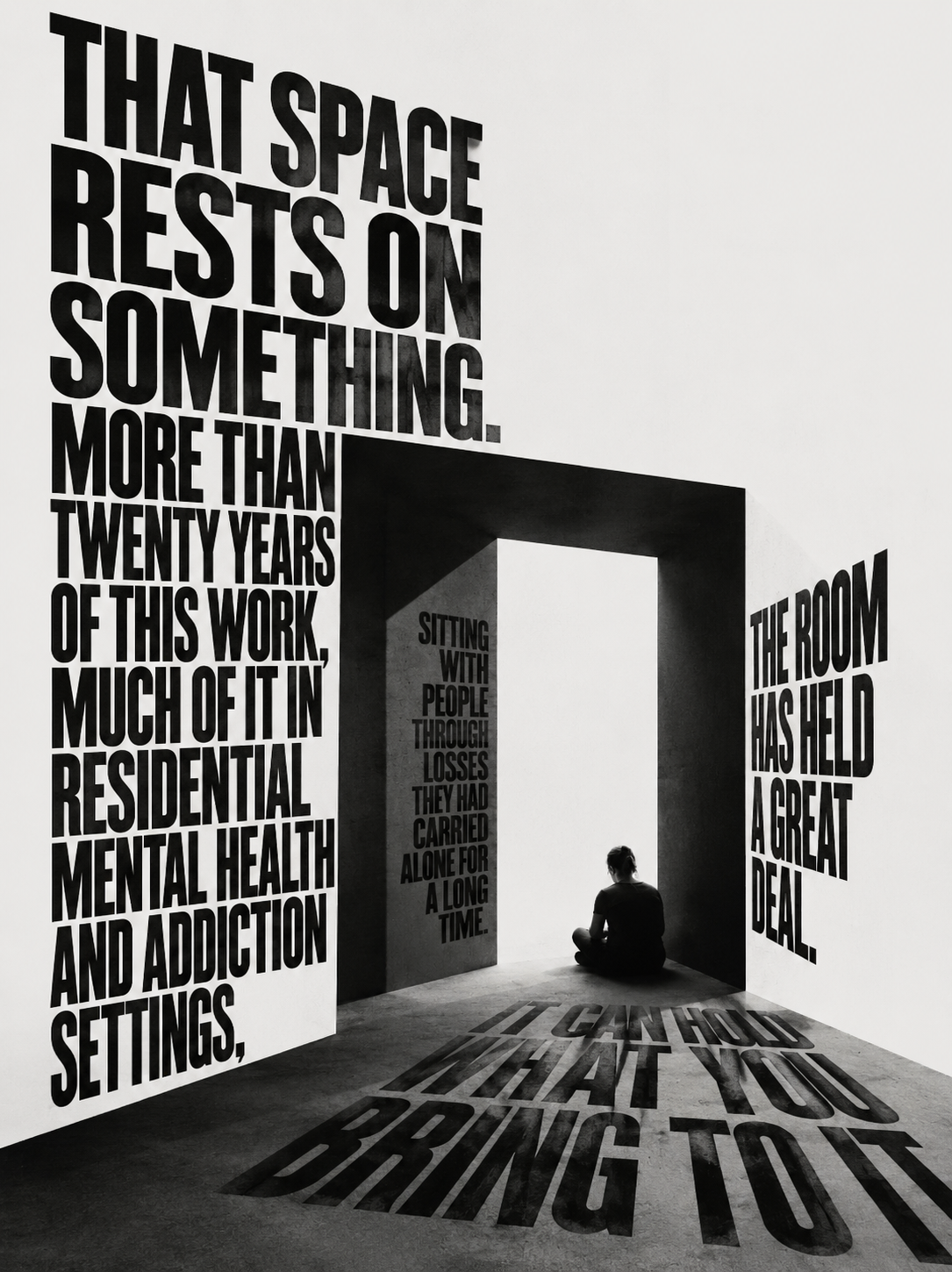
That space rests on something.

A figure sits alone in a doorway built from the monumental words THAT SPACE RESTS ON SOMETHING — more than twenty years of this work; the room has held a great deal, it can hold what you bring to it.

That space rests on something. More than twenty years of this work, much of it in residential mental health and addiction settings, sitting with people through losses they had carried alone for a long time. The room has held a great deal. It can hold what you bring to it.

Progress is the growing of the life, not the shrinking of the pain.
is the growing of the life,
not the shrinking of the pain.
If you are carrying a loss

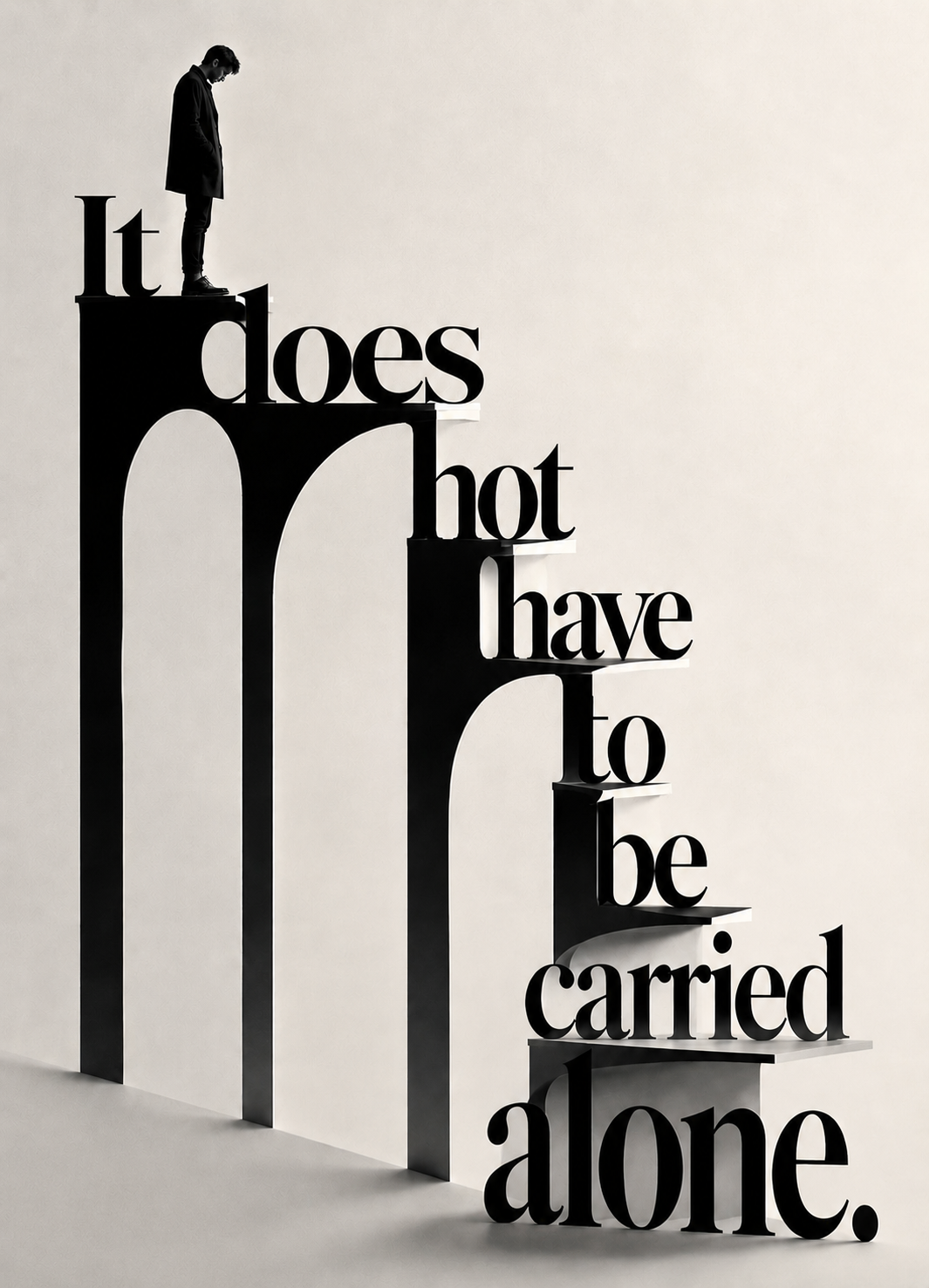
It does not have to be carried alone.

If you are carrying a loss — fresh, or one that has surfaced long after the fact — it does not have to be carried alone.

I work with bereavement and loss from 117 Harley Street, in Norwich, and online.
It does not have to be carried alone.